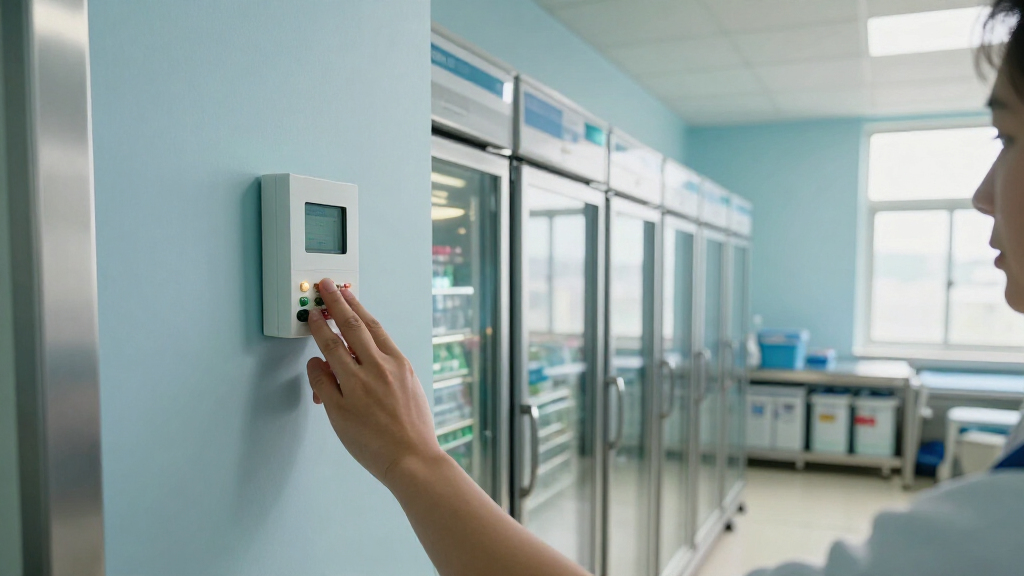

🔍 Read the full analysis: How A Blood Bank's Alarm Helped Counter A Hack On Plasma Storage on ThorstenMeyerAI.com

Get business pricing on office and shipping supplies
- Business-only prices and quantity discounts
- Tax-exempt purchasing
- Multiple users, one account, clear invoices
TL;DR
France’s Établissement français du sang said a cybersecurity incident affecting refrigeration controls at three sites was detected by monitoring and alarms during the night of Nov. 1–2. Frozen plasma was moved as a precaution, and the service reported no health impact or loss of blood products. The reported 110°C figure was a controller setting, not a measured room temperature.
France’s national blood service, the Établissement français du sang (EFS), said a cybersecurity incident altered temperature and defrost settings at cold rooms at three sites during the night of Nov. 1–2, but monitoring alarms detected the changes and staff moved the stored plasma. The EFS reported no health impact and no loss of blood products; the widely circulated figure of 110°C was a programmed setting, not a measured temperature.
In a statement issued Nov. 3 and reported by French media, the EFS said a refrigeration equipment contractor had experienced a cybersecurity incident affecting supervision and control installations for cold rooms at three of its sites. The service said temperature and defrost thresholds were raised to very high levels, without specifying a number in its statement. The rooms held plasma intended for transfusion and plasma for fractionation, a process used to make medicines.
The EFS said its monitoring and alarm systems identified the anomalies quickly. Equipment was brought under control or switched off, and staff moved the contents to other installations as a precaution. Technical teams are working with France’s national cybersecurity agency, ANSSI, and the health ministry. The EFS also said temperature monitoring across its equipment had been stepped up.
The figure of 110°C comes from reporting by Le Canard enchaîné, which said rooms normally set to −30°C had been programmed to that target. Other outlets cited the report. It was a controller setpoint, not a reported reading from the room. The EFS has not publicly named the contractor; Le Canard identified it as Coolworld, which had not commented publicly in the source reporting.
Infographic 01 · 110 °C, explained
A setting, not a temperature
Someone raised the targets of plasma cold rooms at France’s blood service to +110 °C. The rooms never got there. What mattered was the alarm.
Frozen plasma has to stay at or below this line. The danger was thawing, not boiling. A few degrees too warm can already mean discarding bags.
- +110 °CThe programmed setpointTyped into the controller (Canard). Never reached, never measured.
- ~+50 °CHottest reported in the supermarket waveDefrost heaters forced on, same night (AFP, ZDFheute)
- −25 °CThe line that mattersFrozen plasma is stored at −25 °C or colder (EDQM guide via ISBT)
- −30 °CNormal operation of the EFS cold roomsAs reported by Le Canard enchaîné
Why the alarm won
- DetectionEFS monitoring and alarms flagged the anomaly quickly (EFS)
- A person on callAn on-call technician saw the temperature rise in the night (Canard)
- A plan BThe plasma was moved to other installations as a precaution (EFS)
Sources: EFS communiqué, 3 Nov 2026, via franceinfo · Le Canard enchaîné, as reported by Solutions Numériques · ISBT, citing the EDQM Guide · AFP via Al Jazeera, 4 Nov · ZDFheute, 3 Nov. The 110 °C and −30 °C figures come only from Le Canard enchaîné; the EFS gives no number.
Powered by Thorsten Meyer AI
Alarms Protected Stored Plasma
The incident affected equipment holding plasma for patient treatment and material used to make medicines. Frozen plasma must remain sufficiently cold; guidance cited by the International Society of Blood Transfusion says fresh frozen plasma is stored at −25°C or colder. A sustained rise above the required range could put products at risk, even though the EFS said none were lost in this incident.
The reported outcome depended on detection and response: alarms alerted staff, an on-call technician noticed a rising temperature, and plasma was moved. That sequence limited the reported consequences, but does not establish how long the systems were exposed or what would have happened without the intervention. The case highlights the operational risk of remote access to refrigeration controls in settings where temperature-sensitive stock supports health care.
The EFS incident occurred on the same night as a second wave of attacks on supermarket refrigeration systems across Europe, according to the source material. No authority has linked the incidents, and the timing alone does not establish a shared actor or campaign.
Products Worth Considering

Canon PIXMA TR160 Wireless Portable Color Inkjet Printer

Dell UltraSharp 32 U3226QER 4K Thunderbolt Hub Monitor

Canon imagePROGRAF PRO-1100 17-Inch Professional Wireless Inkjet Photo Printer
As an affiliate, we earn on qualifying purchases.
What EFS Has Confirmed
The EFS collects blood donations and supplies hospitals across France. Its public statement confirms an incident involving a refrigeration equipment contractor and control installations at three EFS locations. It does not identify the contractor or disclose all site locations. Le Canard enchaîné reported that one site was in Bourgogne-Franche-Comté; the other two were not publicly identified in the supplied reporting.
The EFS said the stored material included plasma for transfusion and for fractionation. It also said that the products’ safety was not affected and that no health impact or product loss had been identified. The health ministry described the situation as having no operational consequence because it was detected, according to the source material.
Online descriptions of plasma being “boiled” misstate what the 110°C figure represents. The reported number was a target entered into a controller; no source in the supplied material reported that the rooms reached that temperature. A cold room is not an oven, and the actual concern was whether the stored plasma might warm above its required storage range.
“The EFS monitoring and alarm systems made it possible to identify these anomalies quickly.”
— Établissement français du sang, statement issued Nov. 3
Intrusion Details Remain Unknown
The EFS has not identified the contractor, and the attribution of the reported Coolworld connection rests on Le Canard enchaîné’s account. The service has not publicly named the three affected sites in full, described how access to the control system was obtained, or said who was responsible. The supplied reporting does not give a measured peak temperature or the duration of any temperature rise.
It is also unclear whether the incident is connected to the supermarket refrigeration attacks reported on the same night. Two groups describing themselves as pro-Russian claimed the supermarket attacks in a video, according to the source material, but the claim was unverified, the posts were deleted, and no government had attributed those attacks to a group. No authority has linked them to the EFS incident.
Investigation and Monitoring Continue
The EFS said its technical teams are working with ANSSI and the health ministry and that temperature monitoring has been increased across its equipment. The source material does not provide a timetable for the investigation, a public account of the access route, or a date for further findings.
Further updates would need to clarify the contractor’s role, the extent of the affected systems, and whether investigators can identify who changed the settings. Until then, the EFS’s confirmed account remains that alarms detected the anomalies, staff moved the plasma, and no health impact or product loss was reported.
Key Questions
Did the plasma reach 110°C?
No measured temperature of 110°C was reported. The figure came from reporting that described a controller setpoint entered for the cold rooms, not an actual room-temperature reading.
Was any blood product lost?
The EFS reported no loss of blood products and no health impact. It said the contents were moved to other installations as a precaution.
How many EFS locations were affected?
The EFS said control installations at three sites were affected. Le Canard enchaîné identified one region as Bourgogne-Franche-Comté; the other two locations were not public in the supplied reporting.
Who was responsible for the incident?
Responsibility has not been established publicly. The EFS has not named the contractor, and the supplied reporting says the attribution of the contractor to Coolworld came from Le Canard enchaîné. No perpetrator has been identified.
Was the blood-bank incident linked to supermarket attacks?
No link has been established. The incidents occurred during the same night, but the supplied material says no authority has connected them.
Source: ThorstenMeyerAI.com