
📊 Full opportunity report: How Voice Check-Ins Can Support Senior Wellness At Home on IdeaNavigator AI — validation score, market gap, and execution plan.

Get business pricing on office and shipping supplies
- Business-only prices and quantity discounts
- Tax-exempt purchasing
- Multiple users, one account, clear invoices
TL;DR
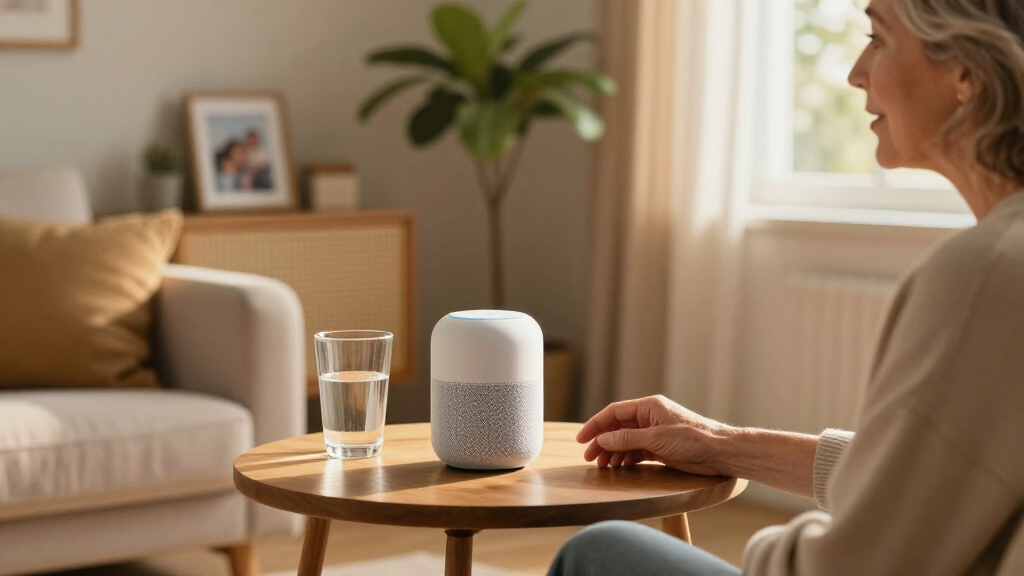
IdeaNavigator AI has outlined a proposed service that would make scheduled AI phone calls to seniors living alone and send a family member an all-clear or alert. The proposal recommends a three-week test with 15 senior-and-family pairs; it does not report that a service has launched or that the approach has been shown to improve safety or wellness.
IdeaNavigator AI has proposed a small pilot of daily automated phone calls to seniors living alone, with a text message to an adult child reporting whether the call was answered or whether a concern was raised. The proposal suggests testing the service with 15 senior-and-family pairs for three weeks; it does not report an operating service, pilot results, or evidence that the calls prevent harm.
According to the IdeaNavigator AI proposal, the service is aimed at an adult child who lives in another city from an independent older parent. A scheduled call would ask a few wellness questions over a landline or mobile phone. Afterward, the system would send the family member a simple all-clear or an alert if the call was missed or the answers seemed concerning.
The proposal identifies a practical gap: relatives may worry about a parent but be unable to call every day, leaving a missed routine check. The proposed product is a daily check-in, not a stated emergency-response or medical service. IdeaNavigator AI does not specify how a concerning answer would be assessed, who would follow up, or how an urgent situation would be handled.
For an initial test, IdeaNavigator AI recommends enrolling 15 senior-and-adult-child pairs and running the calls for three weeks. The proposal’s suggested measures are whether seniors answer the calls and whether families consider the all-clear alerts valuable enough to pay for. It proposes a monthly subscription billed to the adult child, but provides no price, cost estimate, or trial findings.
Testing a Routine Family Check-In
A regular call could give relatives a simple signal that an older family member has answered and responded to basic questions that day. For families separated by distance, that may offer a predictable contact point without requiring the adult child to place a call personally every day. It could also give the senior a brief, scheduled interaction, although the proposal does not establish that automated conversation improves wellbeing or reduces isolation.
The distinction between a check-in and a safety guarantee matters. An answered call cannot establish that a person is medically well or safe at home, and a missed call may have ordinary explanations, such as a phone being out of reach. The value of the service would depend not only on its ability to place calls, but on whether its messages are reliable, understandable and actionable for both the senior and the family member.
The proposed pilot is therefore a test of basic usability and willingness to pay, not proof of health outcomes. Its answer rate and family feedback could help determine whether the concept merits a larger evaluation, but a small three-week trial would not establish its effectiveness across different needs, living situations, or phone habits.
Products Worth Considering

Logitech MX Mechanical Full-Size Wireless Mechanical Keyboard, Tactile Quiet Switches, Backlit Keys, Bluetooth, USB-C, Multi-Device, Graphit

Dell UltraSharp 27 Thunderbolt Hub Monitor (U2726DER)

Dell UltraSharp U2725QE 27-Inch 4K UHD IPS Black Monitor
As an affiliate, we earn on qualifying purchases.
A Small Pilot, Not a Launched Service
IdeaNavigator AI presents the idea as an early product opportunity in aging-in-place wellness: supporting older people who remain at home while giving relatives a routine way to check in. The proposal suggests that newer voice AI may be able to hold short, natural-sounding calls over standard phones and make automated check-ins affordable at scale. That is the proposal’s rationale, not a reported finding from a named evaluation.
The document frames the first product version narrowly: schedule one call each day, ask a few questions, and notify a family member of an answer or a missed or concerning interaction. It recommends validating demand before expanding the service. IdeaNavigator AI’s proposal includes no launch announcement, participating provider, senior or family interview, technical assessment, or prior pilot result.
Safety and Response Rules Unspecified
IdeaNavigator AI reports no pilot results and gives no timeline for starting a test. Its proposal also does not identify the questions the AI would ask, what counts as a concerning response, or how the system would distinguish a genuine problem from a missed call or an unclear answer.
Other open issues include how calls would be scheduled around a senior’s preferences, what happens if the person does not answer repeatedly, and whether the service would connect families to a human responder. The proposal does not detail consent, privacy protections, handling of call records, accessibility for people with hearing or cognitive impairments, or safeguards against mistaken alerts. It also provides no subscription price or evidence that families would pay for the service.
Those details affect whether a daily call would be useful in practice. Until they are tested and clearly defined, the concept should not be treated as a substitute for emergency services, clinical care, or direct contact with a relative.
Pilot Measures Will Test Demand
IdeaNavigator AI proposes recruiting 15 senior-and-family pairs for a three-week trial. The test would track call answer rates and ask whether family members find the all-clear alerts valuable enough to pay for. The proposal does not announce enrollment, trial dates, or results.
If a pilot proceeds, its findings would need to clarify more than whether calls are answered. Families and older participants would need clear instructions about what alerts mean, what action to take after a missed or concerning call, and what the system cannot detect. Further development would also depend on transparent privacy practices and evidence that the service works for seniors with different phone access and communication needs.
For now, the proposal sets out a testable product idea rather than a confirmed service. Whether it becomes a paid offering will depend on pilot participation, family feedback, practical safety procedures, and the costs of operating the calls and alert system.
Source: IdeaNavigator AI proposal
Key Questions
Has a daily AI check-in service for seniors launched?
The IdeaNavigator AI proposal describes a possible service and recommends a pilot. It does not confirm that a service has launched or that a trial is underway.
How would the proposed calls work?
Under the IdeaNavigator AI proposal, a system would call a senior on a schedule, ask a few wellness questions, and text an adult child an all-clear or an alert for a missed or concerning call. The proposal does not specify the questions or alert rules.
What would the suggested pilot measure?
The proposed three-week test with 15 senior-and-family pairs would measure call answer rates and whether families consider the all-clear alerts worth paying for.
Can an AI check-in call confirm that a senior is safe?
No such capability is established in the proposal. An answered call may provide a routine point of contact, but it cannot by itself verify a person’s health or safety at home.
Who would pay for the service?
The concept proposes a monthly subscription paid by the adult child for each parent. It does not give a price or report evidence of customer demand.
Source: IdeaNavigator AI