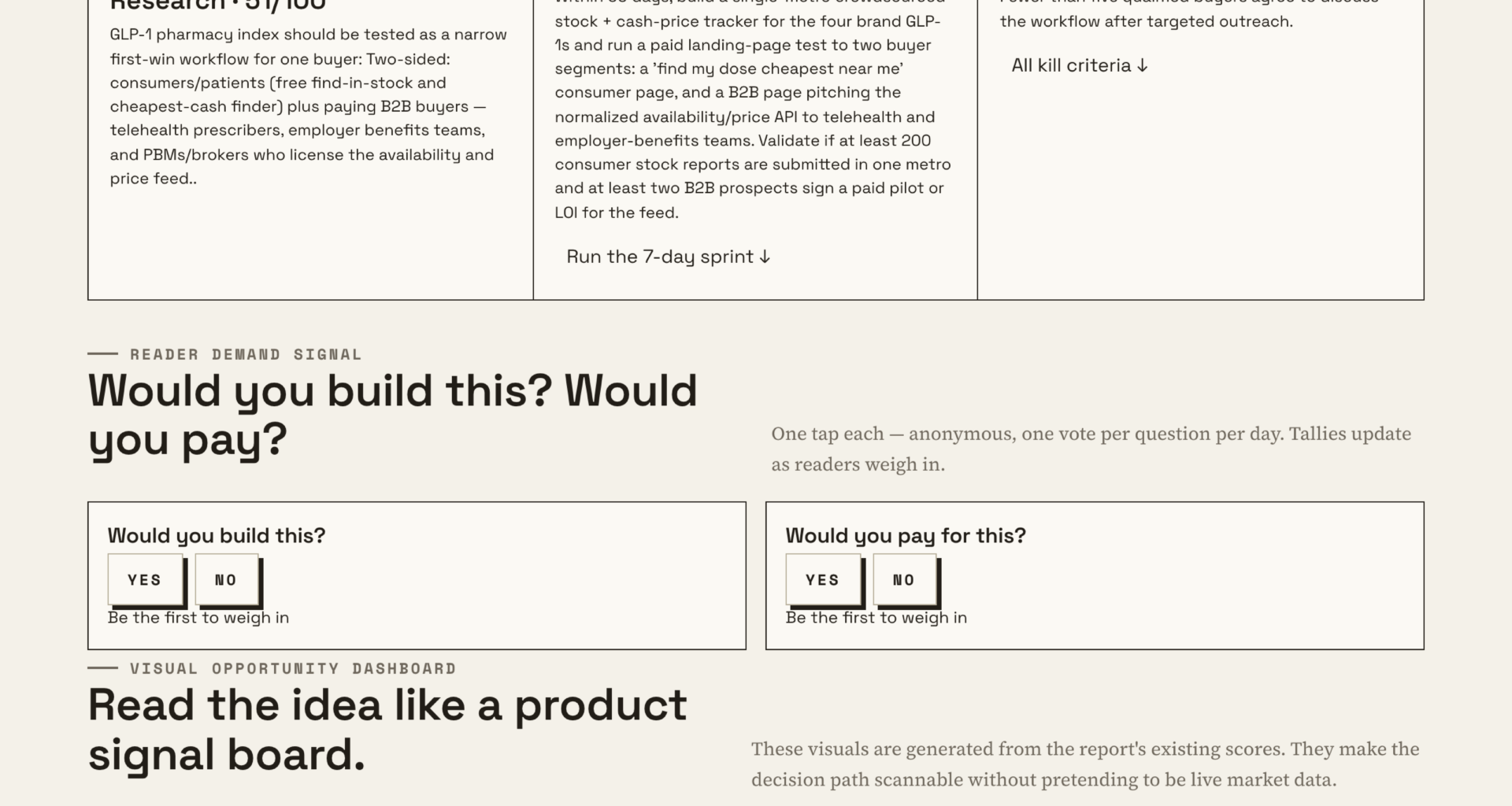
📊 Full opportunity report: Compare GLP-1 Medication Access Across Pharmacy Networks on IdeaNavigator AI — validation score, market gap, and execution plan.

Get business pricing on office and shipping supplies
- Business-only prices and quantity discounts
- Tax-exempt purchasing
- Multiple users, one account, clear invoices
TL;DR
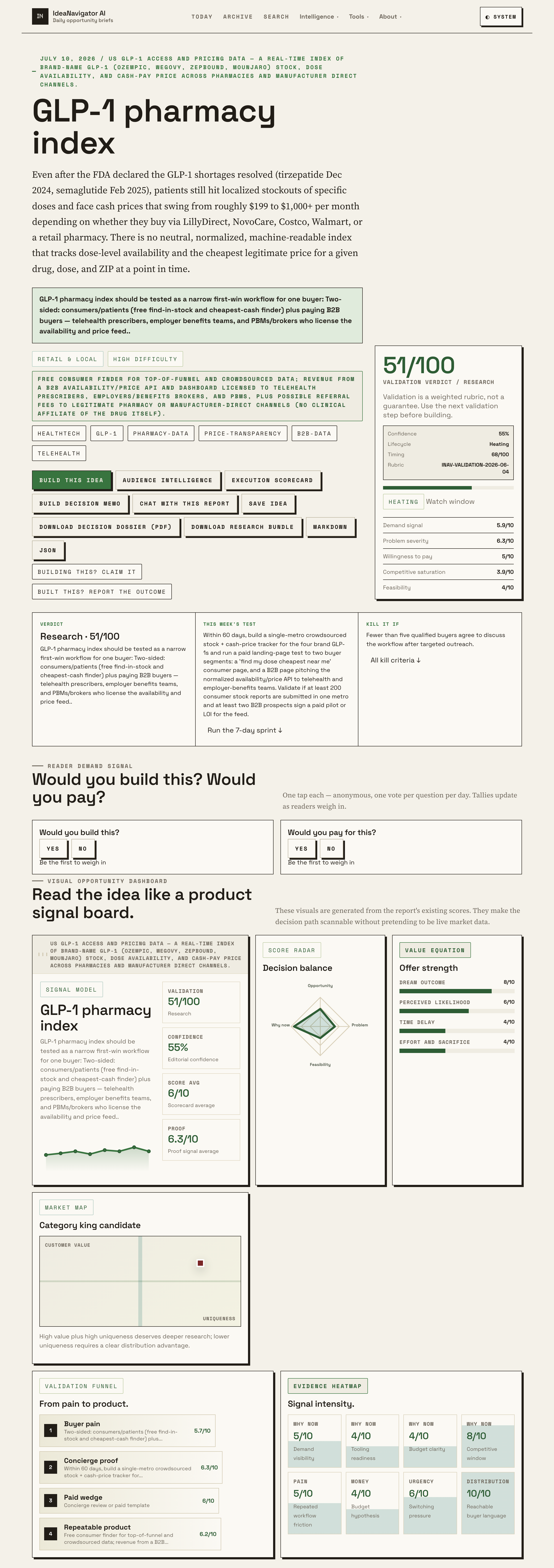
A proposed GLP-1 pharmacy index would let patients compare dose availability and cash prices across pharmacies and manufacturer-direct channels. The plan is an early-stage business concept; no index, paid pilots or consumer results are confirmed.
IdeaNavigator AI has proposed a pharmacy index that would show patients where selected GLP-1 doses are available and compare cash prices by ZIP code. The concept responds to localized stock gaps and price differences across retail pharmacies and manufacturer-direct programs, and would also sell normalized data to telehealth, employer-benefits and pharmacy-benefit buyers. It remains a proposal, not a reported operating service.
The planned consumer tool would cover four brand-name medicines: Ozempic, Wegovy, Zepbound and Mounjaro. Users would enter a drug, dose and ZIP code to look for reported availability and compare legitimate cash-pay options. The proposal calls for combining public pricing information from manufacturer-direct channels, Costco and Walmart with other pharmacy price listings. It also suggests dose-level alerts and crowdsourced reports from patients.
IdeaNavigator AI says cash prices can range from roughly $199 to more than $1,000 per month, depending on the medicine and where it is purchased. The proposal does not provide a date, dose, or consistent set of purchase conditions for that range, so it should not be read as a current quote for any particular patient. Coverage, eligibility, dose, pharmacy and program terms may affect the price a person can actually obtain.
The proposed business would keep the consumer finder free and charge organizations for access to an availability-and-price feed or dashboard. Potential customers named in the proposal include telehealth prescribers, employers, benefits brokers and pharmacy benefit managers. It also suggests possible referral fees from legitimate pharmacy or manufacturer-direct channels, while excluding clinical referrals for the medicines themselves.
Price Data for Patients and Employers
A normalized index could help patients compare options when a particular dose is difficult to find or when cash prices differ across channels. The value would depend on whether listings are current, dose-specific and accurate; an outdated stock report could send a patient toward a pharmacy that no longer has the medicine.
For employers and benefits teams, the proposal frames the issue as one of cost visibility as well as access. It says GLP-1 medicines account for roughly 20% of pharmacy spend among employers, but gives no survey, population, or time period for that figure. If buyers cannot readily compare availability and prices, they may have less information for benefit planning. The concept does not establish that an index would reduce spending or improve access; those outcomes would require testing.
Top picks for "medication acces acros"
As an affiliate, we earn on qualifying purchases.
From Shortages to Fragmented Pricing
The proposal describes a shift from nationwide shortage concerns toward fragmented local availability and pricing. It says the FDA declared shortages of tirzepatide resolved in December 2024 and semaglutide in February 2025. Those milestones do not establish that every pharmacy has every dose in stock. The proposal says patients can still encounter local gaps for specific doses.
It also points to manufacturer-direct cash-pay channels, retail pharmacy programs and changing rules affecting compounded products as reasons the market has become harder to compare. The material names LillyDirect, NovoCare, Costco, Walmart and the TrumpRx portal, which it dates to February 2026. It does not provide a separate account of each channel’s current prices, eligibility rules or inventory. Prices and availability therefore need to be checked directly with the relevant provider.
Coverage, Accuracy and Buyer Demand
No live index or pilot results are reported. It is unclear how the service would verify patient-submitted stock reports, how often pharmacies and direct programs would refresh their data, or how it would distinguish a listing from inventory a patient can actually purchase. The proposal also does not specify how it would handle insurance coverage, manufacturer eligibility rules, changing prices, or differences in package and dose.
Commercial demand is also unproven. The material identifies possible buyers but gives no signed contracts, paid pilots or letters of intent. Its price range and employer-spend estimate lack the comparison details needed to assess them as current market measures.
A Proposed 60-Day Market Test
IdeaNavigator AI proposes testing the concept over 60 days in one metropolitan area. The suggested consumer test would invite people to report whether particular doses are in stock and what cash prices they find. A separate business-facing page would pitch the data feed to telehealth and employer-benefits teams.
The proposal sets two validation goals: at least 200 consumer stock reports in the metro and at least two business prospects signing a paid pilot or letter of intent. No launch date, selected metro, participating pharmacy network or buyer commitment is provided, so it is not clear whether the test has begun.
Source: IdeaNavigator AI
Key Questions
Is the GLP-1 pharmacy index available now?
No launch is reported. The material describes a proposed service and a possible 60-day test, not a functioning public index.
Which medicines would it track?
The proposed initial coverage includes Ozempic, Wegovy, Zepbound and Mounjaro, with searches by drug, dose and ZIP code.
Would the index guarantee a medicine is in stock?
No. The proposal includes crowdsourced stock reports, but does not describe a verification system or guarantee that a listing reflects current inventory.
How would the service make money?
The concept calls for a free consumer finder and paid data feeds or dashboards for organizations such as telehealth prescribers, employers, benefits brokers and pharmacy benefit managers. Paid pilots have not been reported.
Source: IdeaNavigator AI
Halloween Picks
halloween
As an affiliate, we earn on qualifying purchases.