
📊 Full opportunity report: Rack-by-Rack Deployment Trackers: Boosting Data Center Operational Efficiency on IdeaNavigator AI — validation score, market gap, and execution plan.

Get business pricing on office and shipping supplies
- Business-only prices and quantity discounts
- Tax-exempt purchasing
- Multiple users, one account, clear invoices
TL;DR
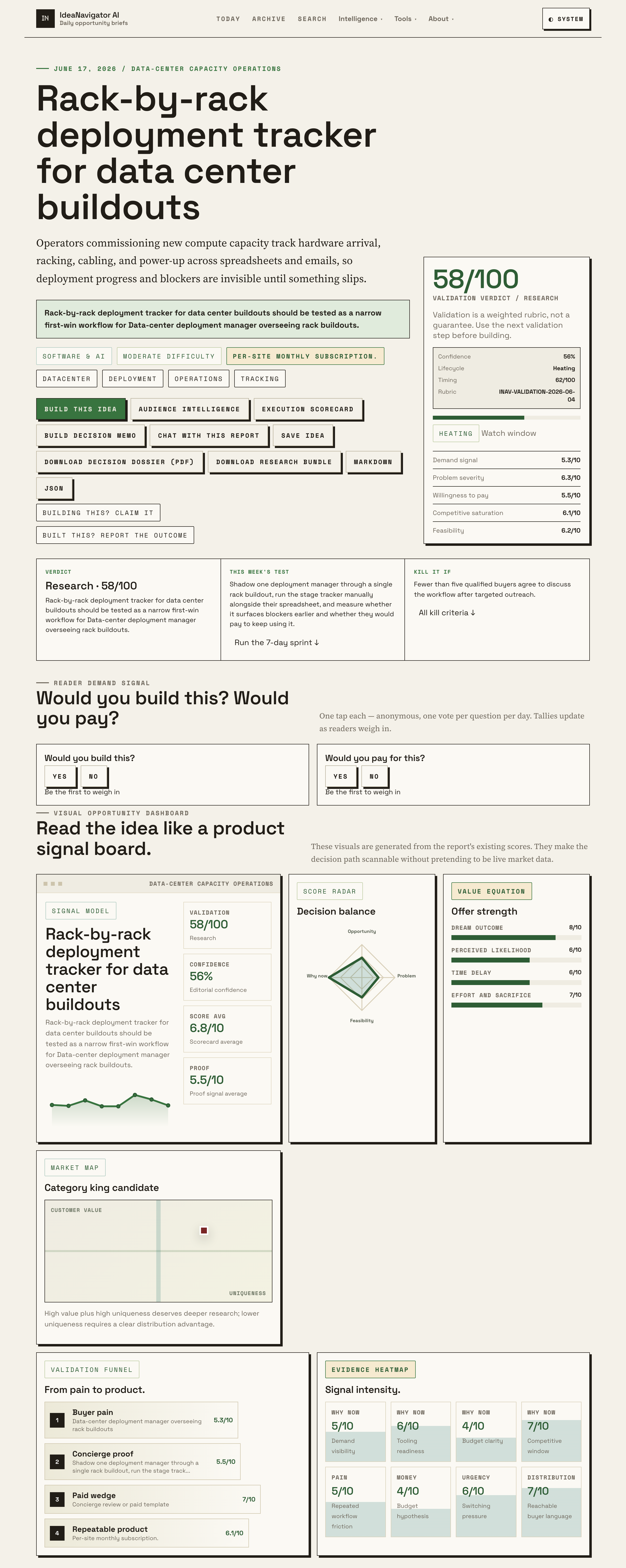
A prototype rack-by-rack deployment tracker for data centers is being tested to enhance operational visibility during buildouts. The tool aims to reduce delays by providing real-time progress updates, with initial testing showing promising results.
A new rack-by-rack deployment tracker is being tested for data center buildouts, aiming to improve operational visibility and reduce delays during deployment processes. This tool is designed for data center deployment managers overseeing large-scale hardware installations, especially as record buildout rates driven by AI demand continue to accelerate.
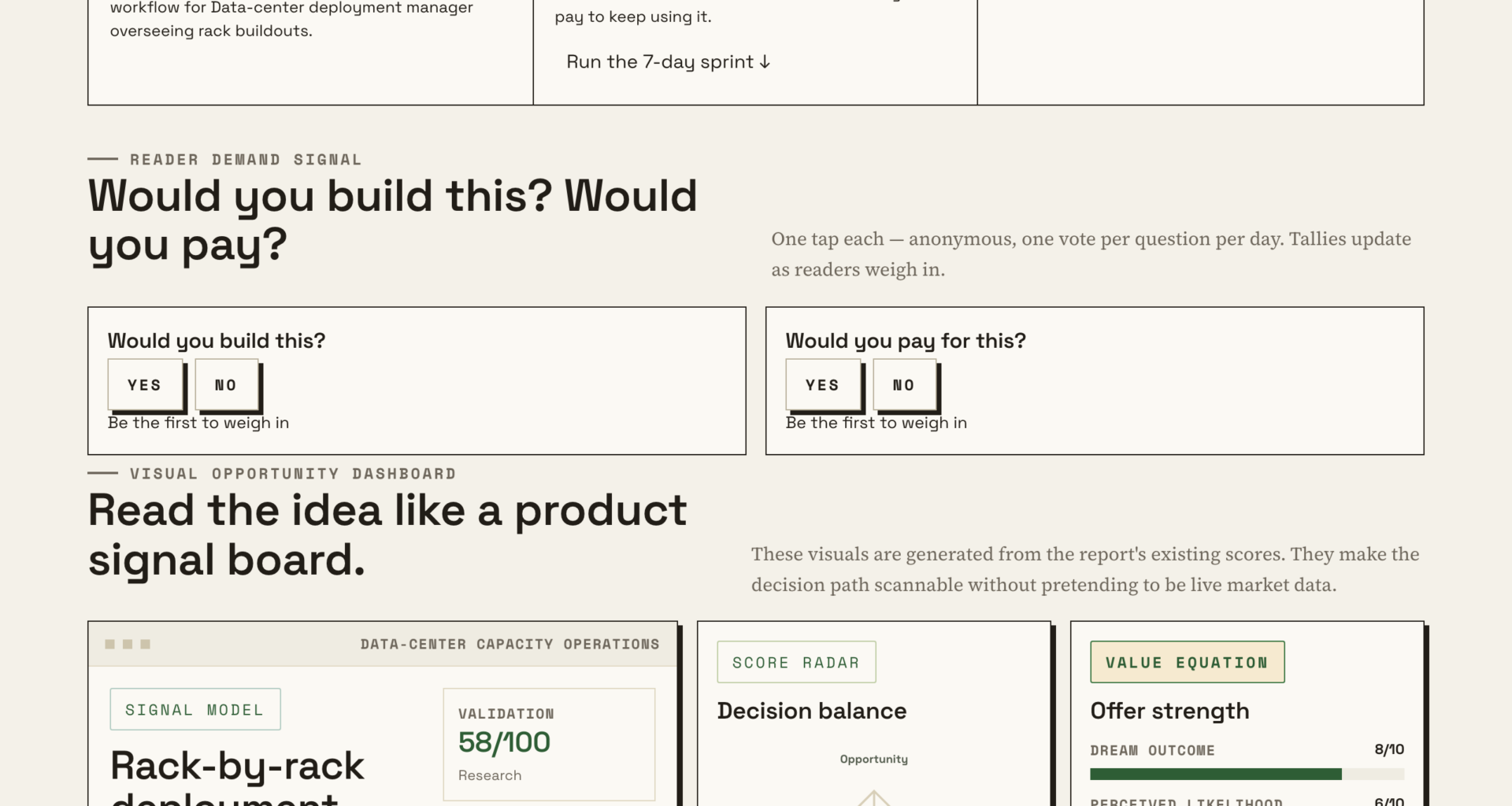
The deployment tracker functions as a simple digital board where managers log each rack through fixed stages: delivered, racked, cabled, powered, and validated. It provides a live percentage of completion and highlights racks that are stalled or facing issues. This approach is intended to replace manual tracking methods like spreadsheets and emails, which often obscure real-time progress and delays.
According to sources involved in the testing, the tracker is being evaluated by shadowing a deployment manager during a single site buildout. The goal is to determine whether the tool can surface blockers earlier than traditional methods and if deployment managers would be willing to pay a subscription fee for ongoing use. The initial concept involves a per-site monthly subscription model, targeting data center capacity operations that are under pressure to meet tight deployment timelines.
Potential Impact on Data Center Deployment Efficiency
This development could significantly enhance the management of data center buildouts amid record demand driven by AI and cloud computing. By providing real-time visibility into each rack’s status, operators can identify and address delays earlier, potentially reducing costly downtime and accelerating deployment timelines. If successful, this tool could become a standard workflow component, improving operational efficiency and cost management across the industry.
Products Worth Considering

Logitech MX Mechanical Wireless Illuminated Keyboard, Tactile Quiet, Graphite

Dell UltraSharp U3225QE 31.5-Inch 4K UHD 120Hz IPS Black Thunderbolt Hub Monitor

Dell UltraSharp U2424H 24-Inch FHD Monitor
As an affiliate, we earn on qualifying purchases.
Growing Pressure for Faster Data Center Buildouts
The data center industry is experiencing unprecedented growth, driven by surging demand for AI, machine learning, and cloud services. This has led to record-breaking buildout schedules, often under compressed timelines. Currently, operators rely heavily on manual tracking methods, which are prone to delays in identifying issues. The concept of a dedicated rack-by-rack tracker emerges as a response to this challenge, aiming to streamline workflows and improve transparency during deployment phases.
Early-stage testing involves shadowing a deployment manager to compare the new tracker against existing manual methods, with initial feedback indicating potential for earlier detection of deployment blockers. The concept is still in the pilot phase, with broader adoption contingent on validation results.
“The rack-by-rack deployment tracker could be a game-changer in managing large-scale data center buildouts, especially as timelines continue to shrink.”
— an anonymous researcher
Unconfirmed Benefits and Adoption Challenges
It is not yet clear how effectively the tracker will perform across different sites or whether deployment managers will universally adopt it. The pilot is limited to a single site, and broader testing is needed to confirm whether early blocker detection translates into measurable efficiency gains. Additionally, questions remain about the pricing model’s viability and the long-term ROI for operators.
Next Steps for Validation and Industry Adoption
The next phase involves expanding pilot testing to multiple sites to assess scalability and effectiveness. If results continue to be positive, developers plan to refine the interface and functionalities based on user feedback. A broader rollout could follow, with subscription plans tailored to different data center sizes and operational complexities. Industry stakeholders will be watching closely to determine if this approach becomes a standard part of data center deployment workflows.
Key Questions
How does the rack-by-rack deployment tracker work?
The tracker logs each rack through fixed stages—delivered, racked, cabled, powered, validated—and provides real-time progress updates and alerts on stalled racks, replacing manual spreadsheets and emails.
What are the main benefits of using this tracker?
It offers increased visibility into deployment progress, early detection of delays, and potential cost savings by reducing downtime and speeding up buildout timelines.
Is this tracker ready for widespread use?
The tool is currently in early testing with promising results, but broader validation across multiple sites is needed before it can be widely adopted.
How much will this deployment tracker cost?
The initial model proposes a per-site monthly subscription, but final pricing will depend on further development and industry feedback.
Could this tool replace existing manual tracking methods?
If proven effective, it could significantly reduce reliance on spreadsheets and emails, providing more accurate and timely deployment insights.
Source: IdeaNavigator AI