
📊 Full opportunity report: VR Factory Trainers: The Next Generation Of Industrial Skills Development on IdeaNavigator AI — validation score, market gap, and execution plan.

Get business pricing on office and shipping supplies
- Business-only prices and quantity discounts
- Tax-exempt purchasing
- Multiple users, one account, clear invoices
TL;DR
Manufacturers are piloting a VR training platform using standalone headsets to address skills gaps and safety issues. Early tests focus on high-risk procedures, with promising results expected to shape future workforce development.
Manufacturing companies are testing a new virtual reality (VR) training platform designed to accelerate onboarding and improve safety compliance. The initiative targets mid-to-large manufacturers facing significant labor shortages and skills gaps, aiming to deliver scalable, standardized training on dangerous machinery using affordable standalone VR headsets and cloud-based tracking systems.
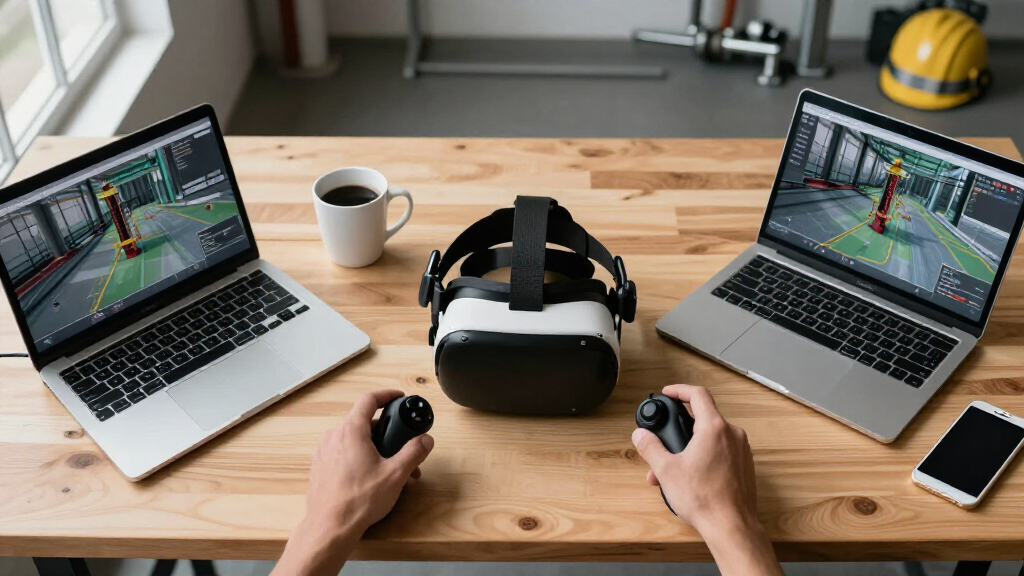
The VR factory trainer is being tested as a pilot project with a focus on high-risk procedures such as lockout/tagout and forklift safety. The system employs standalone headsets like Meta Quest, eliminating the need for costly, wired setups and enabling deployment across multiple plants with minimal capital investment.
According to sources familiar with the project, the pilot involves shipping 5-10 headsets to a single plant, along with a core training module and a cloud dashboard that monitors completion rates, hazard recognition, and quiz scores. The goal is to measure improvements in time-to-competency and hazard detection accuracy compared to traditional classroom training. Early indicators suggest potential for faster onboarding and better hazard recognition, but definitive results are still pending.
The platform is offered as a SaaS subscription, with options for custom scenario development and hardware management. The broader immersive enterprise training market, valued at approximately USD 14.55 billion in 2025, is seeing increased interest from manufacturing firms seeking scalable, effective workforce development solutions amid a tight labor market.
Potential Impact on Manufacturing Workforce Development
This VR training approach could significantly reduce onboarding times and safety incidents, addressing critical labor shortages and skills gaps. By standardizing training and providing immersive, repeatable experiences, manufacturers can improve worker readiness and safety compliance, ultimately lowering costs associated with accidents and turnover. If successful, this pilot could pave the way for widespread adoption across the industry, transforming traditional training methods.
As an affiliate, we earn on qualifying purchases.
Growing Need for Scalable, Safe Training Solutions in Manufacturing
The U.S. manufacturing sector faced approximately 409,000 unfilled positions in August 2025, with projections indicating a need for 3.8 million new workers by 2033. Traditional training methods—classroom instruction and on-the-floor demonstrations—are proving inadequate to meet this demand due to their slow pace, inconsistency, and safety risks.
Advances in cloud-native XR streaming and the decreasing costs of standalone headsets like Meta Quest and Pico have created new opportunities for immersive training. The market for enterprise VR solutions is growing at an estimated CAGR of around 20%, reflecting increased industry interest in scalable, effective workforce development tools. This pilot program aims to validate VR’s effectiveness in a real-world manufacturing setting.
Prior efforts have shown that VR can improve engagement and retention, but widespread industry adoption hinges on demonstrating measurable improvements in training outcomes and safety performance.
VR safety training modules for manufacturing
As an affiliate, we earn on qualifying purchases.
As an affiliate, we earn on qualifying purchases.
Unclear Outcomes and Long-Term Adoption Risks
While early pilot results are promising, it is not yet confirmed whether VR training will lead to statistically significant improvements in onboarding speed and hazard recognition across different procedures and plants. The scalability, long-term cost-effectiveness, and integration with existing training programs remain to be fully validated. Additionally, user acceptance and technological challenges could influence broader adoption.
As an affiliate, we earn on qualifying purchases.
Next Steps in Pilot Evaluation and Industry Adoption
The ongoing pilot will collect data over the next 60-90 days, focusing on time-to-competency, hazard recognition scores, and supervisor assessments. If results demonstrate clear benefits, manufacturers are expected to expand VR training to additional procedures and facilities. Industry stakeholders will closely monitor these outcomes to assess VR’s role in future workforce development strategies.
industrial VR headsets for workforce development
As an affiliate, we earn on qualifying purchases.
As an affiliate, we earn on qualifying purchases.
Key Questions
What types of procedures are being tested with VR training?
The current pilot focuses on high-risk procedures such as lockout/tagout and forklift safety, which are critical for worker safety and compliance.
How cost-effective is VR training compared to traditional methods?
Initial estimates suggest that standalone headsets and cloud-based platforms can reduce capital costs and enable scalable deployment, but comprehensive cost comparisons will depend on pilot outcomes and long-term maintenance expenses.
Will VR training replace classroom instruction entirely?
It is unlikely to replace classroom training entirely; instead, VR is expected to complement existing methods by providing immersive, hands-on practice for complex or dangerous procedures.
When could widespread adoption of VR training occur?
If pilot results are positive, industry adoption could accelerate within the next 1-2 years, especially as manufacturers seek scalable solutions to address labor shortages and safety compliance.
What are the main challenges to implementing VR training in manufacturing?
Challenges include user acceptance, integration with existing training programs, technological reliability, and ensuring content relevance across diverse procedures and plant environments.
Source: IdeaNavigator AI
Halloween Picks
halloween
As an affiliate, we earn on qualifying purchases.