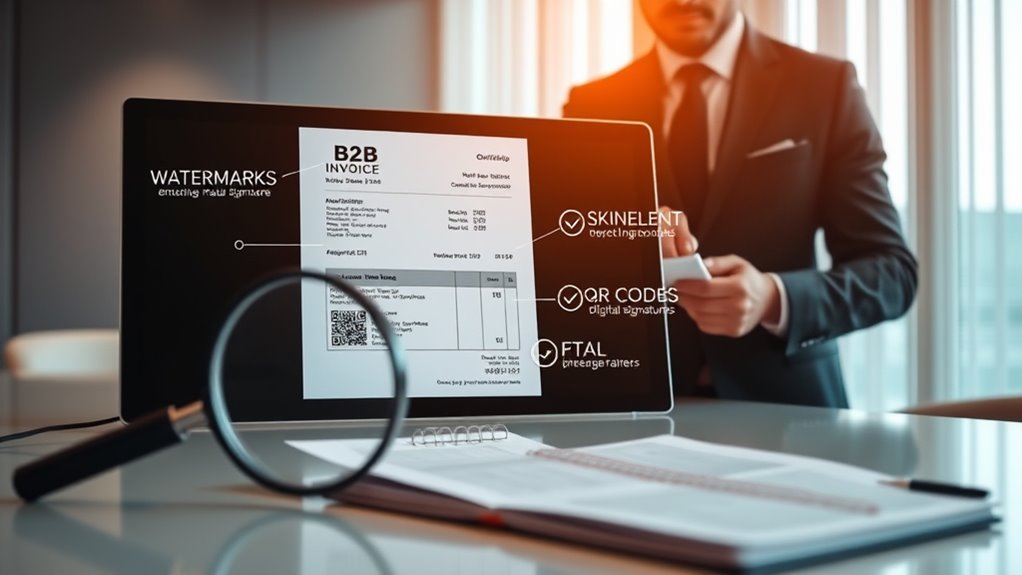

To prevent fraud in B2B invoices, implement digital signatures to confirm authenticity and detect tampering, along with encrypting invoices for secure transmission. Use secure channels and access controls to keep sensitive data safe. Automate these security measures with modern platforms and educate staff on verifying signatures and handling encrypted files. Keep detailed records to support investigations. Continuing will reveal key strategies to strengthen your invoice security and protect your business from fraud.
Key Takeaways
- Implement digital signatures to verify invoice authenticity and detect tampering during transmission.
- Encrypt invoices and use secure communication channels to prevent unauthorized access and data breaches.
- Automate security protocols within invoicing platforms to streamline fraud prevention efforts.
- Maintain detailed transaction records and audit trails for accountability and evidence in fraud investigations.
- Educate staff on verifying signatures, handling encrypted documents, and recognizing suspicious activities.
In today’s fast-paced business environment, preventing fraud in B2B invoices is more essential than ever. With cybercriminals constantly evolving their tactics, safeguarding your invoicing process requires proactive strategies. One of the most effective methods is implementing digital signatures. These electronic identifiers verify the authenticity of an invoice, ensuring it genuinely comes from your company and hasn’t been tampered with during transmission. When your clients receive an invoice with a digital signature, they can instantly confirm its legitimacy, reducing the risk of accepting fraudulent documents. Digital signatures also provide an audit trail, making it easier to track any changes and hold parties accountable if disputes arise. Alongside digital signatures, invoice encryption acts as a critical layer of security. Encrypting your invoices ensures that only authorized recipients can access the sensitive information within. Even if an invoice is intercepted during transmission, encryption renders the data unreadable to unauthorized parties, preventing potential data breaches or fraudulent alterations. These encryption techniques, especially when combined with secure communication channels, create a robust barrier against cyber threats targeting your invoicing process. Furthermore, integrating these technologies into your existing invoicing system streamlines the process, making fraud prevention seamless without adding excessive complexity. Many modern invoicing platforms support digital signatures and encryption as standard features, allowing you to automate these security measures while maintaining efficiency. It’s important to remember that technology alone isn’t enough; educating your team about best practices is equally crucial. Encourage staff to verify digital signatures diligently and to handle encrypted documents with care, ensuring they don’t inadvertently compromise security protocols. Regularly updating your software and security certificates also plays an essential role in maintaining a strong defense against evolving cyber threats. Implementing strict access controls and role-based permissions further minimizes the chance of internal fraud or accidental mishandling of invoices. Additionally, maintain detailed records of all transactions and security measures, which can serve as evidence if any fraud attempts are suspected. Staying vigilant is vital because the use of advanced security technology enhances your defenses and helps detect suspicious activities early. By combining digital signatures, invoice encryption, and layered security protocols, you create a multi-tiered defense that greatly reduces your exposure to invoice fraud. This approach not only protects your financial interests but also reinforces trust with your partners, demonstrating your commitment to secure and transparent business practices. Staying vigilant and leveraging the latest security technologies ensures your invoicing process remains resilient against fraud, safeguarding your business’s reputation and bottom line.

Vinpower Digital CDPRIBBK U-Print Thermal Printer Black Ribbon Cartridge for Primera Z1, Teac P11, Stampa Ink
For Black u-print thermal printer ribbon cartridge
As an affiliate, we earn on qualifying purchases.
As an affiliate, we earn on qualifying purchases.
Frequently Asked Questions
How Can Small Businesses Effectively Identify Invoice Fraud?
You can effectively identify invoice fraud by performing thorough invoice verification and vendor screening. Always cross-check invoice details with purchase orders, contracts, and previous invoices. Verify vendor information through trusted sources before making payments. Keep an eye out for unusual amounts, duplicate invoices, or discrepancies. Regularly update your vendor database and train your team to recognize common fraud signs, ensuring you catch potential issues early and protect your business finances.
What Are Emerging Trends in B2B Invoice Fraud Schemes?
You should watch for emerging B2B invoice fraud schemes involving fake digital signatures and manipulated blockchain verification. Fraudsters increasingly exploit digital signatures to forge authorization, while blockchain verification can be manipulated if not properly secured. Stay vigilant and implement robust digital signature authentication and blockchain validation processes. These trends highlight the importance of advanced cybersecurity measures to detect and prevent sophisticated invoice fraud schemes effectively.
How Does Cross-Border Invoicing Impact Fraud Risk?
Cross-border invoicing increases your fraud risk by 30% because it complicates verifying authenticity. When dealing with currency exchange, scammers exploit differences in exchange rates and lack of oversight, making it easier to manipulate invoices. You should be vigilant about cross-border transactions, ensuring proper verification, and monitoring currency fluctuations to prevent fraud. Staying alert helps protect your business from these heightened risks associated with international invoicing.
What Role Does AI Play in Detecting Invoice Fraud?
AI plays a vital role in detecting invoice fraud by analyzing vast amounts of data quickly. You can leverage AI analytics and machine learning techniques to identify unusual patterns or discrepancies that might indicate fraudulent activity. These systems continuously learn from new data, improving their accuracy over time. This proactive approach helps you catch suspicious invoices early, reducing financial losses and strengthening your overall fraud prevention strategy.
How Should Companies Respond to Suspected Invoice Fraud Incidents?
Responding to suspected invoice fraud is like catching a sneaky fox in your henhouse. You should immediately verify the vendor’s details through robust Vendor Verification processes and review payment protocols for any irregularities. Suspend payments to the suspicious vendor, document all findings, and alert your finance and security teams. Consider involving legal and law enforcement if necessary, and strengthen your fraud prevention measures to prevent future incidents.
invoice encryption tools
As an affiliate, we earn on qualifying purchases.
As an affiliate, we earn on qualifying purchases.
Conclusion
By staying vigilant and implementing strong fraud prevention measures, you protect your business from costly scams. Double-check invoices, verify unfamiliar contacts, and embrace technology solutions. Remember, an ounce of prevention is worth a pound of cure. When you stay alert and proactive, you reduce risks and keep your financials secure. In the world of B2B transactions, being cautious today guarantees a safer tomorrow. Don’t wait for trouble to find you—stay one step ahead.
secure invoicing platform
As an affiliate, we earn on qualifying purchases.
As an affiliate, we earn on qualifying purchases.

Dri Mark 351R1 Counterfeit Bill Detector Marker Pen – Made in The USA 3 Times More Ink, Pocket Size, Fake Money Checker, Money Loss Prevention Tester & Fraud Protection for U.S. Currency (Pack of 12),Black
Simply make a small mark on U.S. currency.
As an affiliate, we earn on qualifying purchases.
As an affiliate, we earn on qualifying purchases.