📊 Full opportunity report: How SMB Owners Can Coach Themselves To Speak On Camera on IdeaNavigator AI — validation score, market gap, and execution plan.

Get business pricing on office and shipping supplies
- Business-only prices and quantity discounts
- Tax-exempt purchasing
- Multiple users, one account, clear invoices
TL;DR
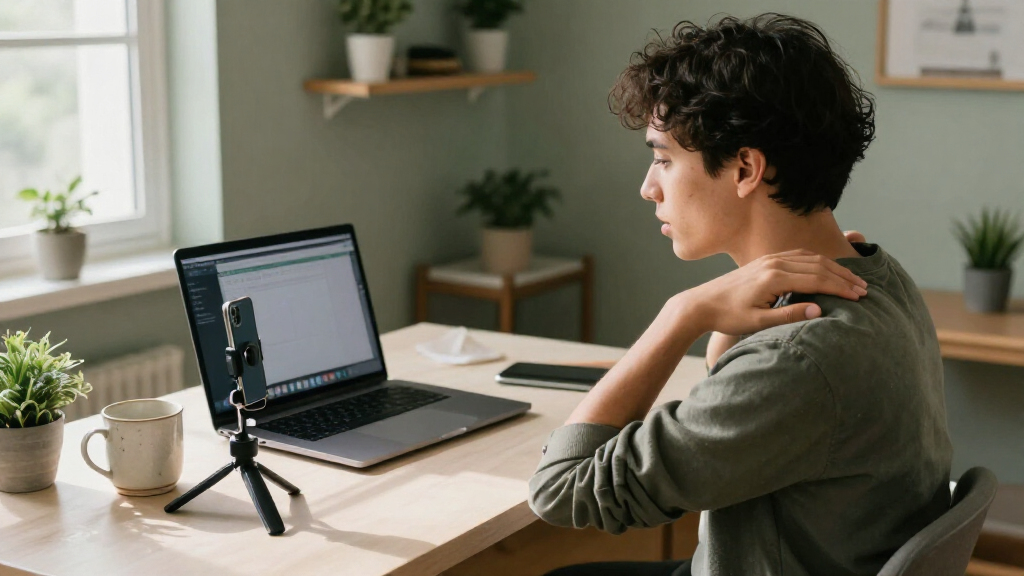
IdeaNavigator AI has outlined a proposed practice app for business owners who know video matters to their marketing but freeze when recording. The concept includes short daily exercises and private feedback, with a 30-day cohort proposed to test whether participants publish a real video by day 45; no test results or launched product are reported.
IdeaNavigator AI has proposed a practice app for business owners who know video can support their marketing but struggle to record themselves. The concept pairs two-minute daily exercises with private feedback on delivery, then proposes testing whether participants publish a real video by day 45; there are no reported results or evidence that the app has launched.
The proposed audience is narrowly defined: owners who already recognize video’s potential but are held back by camera anxiety, including stumbling over words, criticizing their own performance and making repeated takes. The proposal argues that standard public-speaking courses may not address the particular experience of recording alone. That is the concept’s stated rationale, not a reported comparison of training programs.
The suggested minimum product would lead users through daily, two-minute prompts, starting with reading aloud and progressing toward speaking more freely. It would analyze pace, filler words, eye line and energy, show changes over time and use confidence streaks to encourage regular practice. The proposed end point is moving from exercises to recording real business content. No app, performance data or technical validation is described.
For validation, IdeaNavigator AI proposes a 30-day cohort of 100 business owners, compared with a waitlist control group. The stated measure is the share of participants who publish their first real video by day 45. The proposal also suggests a consumer subscription and a team tier for agencies coaching clients, but it provides no pricing, costs, enrollment details or evidence of customer demand.
How SMB Owners Can Coach Themselves to Speak on Camera
A proposed practice app pairs two-minute daily exercises with private delivery feedback. Its central question: can regular, low-pressure practice help business owners publish a real video?
Practice for the moment the camera turns on
The concept targets owners who see video’s marketing potential but struggle with solo recording, repeated takes, and self-criticism.
Owners who already see the value
Built around small-business owners who know video can support marketing but feel held back when recording themselves.
Solo recording can feel exposing
Stumbling over words, reviewing delivery, and repeating takes are the challenges described in the proposal.
A focused practice workflow
The proposal argues that recording alone differs from speaking to an audience. This is its rationale, not a proven comparison with public-speaking courses.
Small repetitions, gradually more real
These are suggested features and feedback categories. No app launch, technical validation, or measured performance is reported.
Read aloud
Use a short, guided prompt for a two-minute daily session.
Speak more freely
Progress toward less scripted, more spontaneous delivery.
Get private feedback
Potential signals: pace, filler words, eye line, and energy.
Record business content
Move from practice exercises toward a video intended for publication.
Test publishing behavior by day 45
The proposed test looks for an initial behavioral signal. A published video alone would not show quality, reach, sales, or causation.
30 days of practice
100 business owners
Compare a cohort with a waitlist control group, then measure the share who publish their first real video by day 45.
Proposal versus evidence
Keep the concept’s intended features separate from confirmed availability and outcomes.
| Topic | Proposed | Reported status |
|---|---|---|
| Daily coaching | Short prompts, progressing from reading to freer speech | ~ Concept only |
| Delivery feedback | Pace, filler words, eye line, energy, and progress over time | ~ Capabilities not validated |
| Trial | 30-day cohort of 100 owners, with a waitlist comparison | ✗ No trial results reported |
| Commercial model | Consumer subscription and possible agency team tier | ✗ No pricing or demand evidence |
| Availability | A practice app for business owners | ✗ No launch or confirmed product |
What the proposed test can—and cannot—show
Publication is a useful first behavior to track, but it is only one step in the larger question of product value.
The proposed day-45 measure covers the first-video step. Audience response and business impact are not included in the reported test plan.
What readers should know
Has the app launched?
No launch is reported. The material describes a proposed app and test, with no app name, release date, or confirmed availability.
What would the app do?
It would offer brief speaking exercises and feedback on pace, filler words, eye line, and energy. These remain planned features.
How would the idea be tested?
The proposal suggests 100 owners in a 30-day cohort, a waitlist comparison, and a measure of first-video publication by day 45.
Would a first video prove it works?
No. Publication would show whether participants took that step, but not whether the app caused it or whether the video helped the business.
A Test of Video Practice
If developed and tested, the idea would address a practical gap for small-business owners: knowing that video may be useful does not necessarily make recording feel manageable. A tool built around brief, private practice could offer a lower-pressure alternative to immediately publishing a polished clip or attending a general speaking course. That potential benefit remains a product hypothesis, not an established outcome.
The proposed day-45 measure focuses on behavior rather than app activity alone. Whether users publish a first video could show more directly if practice helps them move beyond rehearsal. Yet publication by itself would not establish that a video performed well, attracted customers or generated revenue. Those outcomes are not part of the stated test, and the proposal supplies no evidence of business impact.
For owners with limited time and marketing resources, the distinction matters. A paid subscription would need to provide value beyond repeated prompts and automated scores. Users and agencies would also need to know what the feedback measures, how reliably it works and whether the practice fits their communication goals. The suggested cohort could provide an initial behavioral signal, but it would not by itself settle those questions.
Products Worth Considering

Canon PIXMA PRO-200S Wireless Professional Inkjet Photo Printer

HP OfficeJet 250 Wireless Mobile All-in-One Inkjet Printer

Logitech MX Mechanical Wireless Illuminated Keyboard, Tactile Quiet, Graphite
As an affiliate, we earn on qualifying purchases.
From Recording Anxiety to Practice
The concept starts from the observation that pressure to use video reaches businesses of different sizes, while some owners struggle with the act of recording. It identifies solo recording as a different setting from speaking to an audience: a person can pause, repeat takes and review their own delivery without anyone else present. The proposal frames those conditions as a reason to build a specialized practice workflow rather than rely only on broad public-speaking instruction.
It also points to multimodal AI as a possible way to assess elements such as speaking pace, filler words, eye contact and energy. These are proposed feedback categories, not confirmed capabilities of a product. The material does not identify a model, describe how eye line or energy would be measured, or explain how scores would account for different speaking styles, devices and recording environments.
The suggested path is deliberately incremental: begin with reading, build toward unscripted speaking, track repeated practice and then encourage users to record content they might actually publish. The commercial idea follows that same proposed audience, with individual subscriptions and a possible agency tier. Both the product design and business model remain proposals rather than announced offerings.
Product and Test Details
It is not clear whether development has begun, whether the proposed cohort will run or who would recruit and support participants. No launch date, app name, technical specifications or subscription price is provided. The proposal also does not report interviews, waitlist demand, user feedback or evidence that business owners will pay for this kind of coaching.
The planned comparison would need further details to interpret its results. The proposal does not explain how owners would be assigned to the cohort or waitlist, how many people in each group would complete the study, or how “publishes their first real video” would be verified. It also does not specify whether the test would track the quality, reach or business effect of videos. Until those details and findings exist, the app’s usefulness and commercial prospects remain unproven.
Automated feedback raises additional open questions: how measurements would be calculated, what recordings or personal data would be stored, and how users could control or delete them. No privacy practices, safeguards or accuracy data are described. Those details would matter for owners deciding whether to record practice sessions with a new service.
Evidence Needed Before Launch
The next step identified in the proposal is a 30-day trial with 100 owners, using a waitlist group for comparison and checking publication of a first real video by day 45. If carried out, organizers would need to report participation, completion and outcome figures for both groups, along with the method used to confirm publication. No timeline for starting or publishing that test has been announced.
Further evaluation would need to establish whether short exercises change recording behavior beyond the trial period, whether the automated feedback is consistent and useful, and whether owners or agencies will pay for the service. Until a product, study protocol and results are available, the concept should be understood as an early proposal rather than a proven solution for camera anxiety.
Source: IdeaNavigator AI
Key Questions
Has the camera-practice app launched?
No launch is reported. The material describes a proposed app and a suggested way to test it, without an app name, release date or confirmed availability.
What would the proposed app do?
It would offer short daily speaking exercises, progressing from reading to more spontaneous speech, and provide feedback on pace, filler words, eye line and energy. These are planned features, not confirmed product capabilities.
How would the idea be tested?
IdeaNavigator AI proposes a 30-day cohort of 100 owners and a waitlist comparison. The main measure would be how many participants publish a first real video by day 45. No test results are available.
Would publishing a first video prove the app works?
Not on its own. Publication would indicate whether users took that step, but would not show whether the app caused the change or whether videos reached audiences or supported business results. The proposal gives no such findings.
Source: IdeaNavigator AI