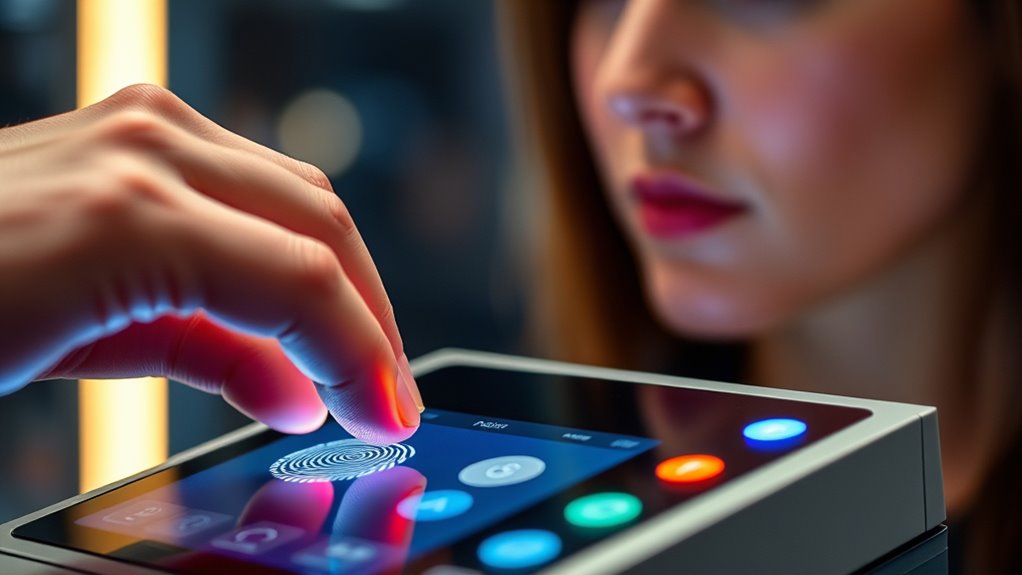

Biometric payments using face and fingerprint recognition let you make quick, contactless transactions by authenticating your identity with your biological features. They offer a seamless and secure way to pay without cash or cards, making shopping more convenient. However, it’s important to contemplate security and privacy concerns, as your biometric data could be vulnerable if mishandled or stolen. To understand how these systems protect you and what potential risks exist, keep exploring the details.
Key Takeaways
- Biometric payments use facial and fingerprint recognition for quick, secure transactions without needing cards or passwords.
- These methods enhance convenience but raise concerns about data security, storage, and potential misuse.
- Facial and fingerprint data are unique identifiers, making them difficult to change if compromised.
- Privacy issues include risks of surveillance, unauthorized sharing, and lack of transparency in data handling.
- Regulations vary by country, emphasizing the need for clear policies to protect user rights and biometric information.
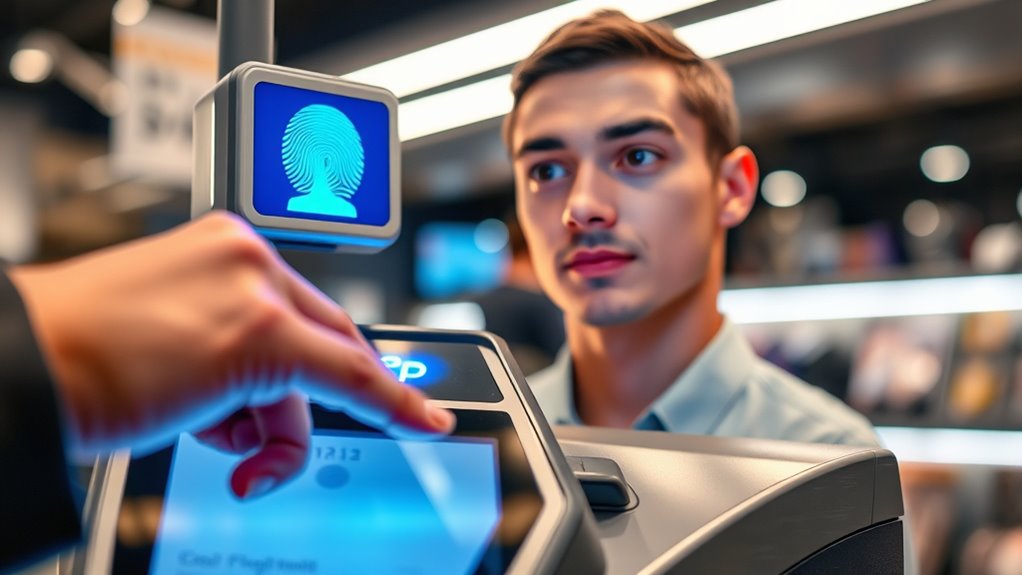
Biometric payments are revolutionizing the way you make transactions by allowing you to pay using your unique biological features, such as fingerprints, facial recognition, or iris scans. This technology offers a seamless and quick way to complete purchases without fumbling for cards or cash, making your shopping experience smoother. Instead of remembering PINs or passwords, you simply authenticate your identity through a scan or recognition process. It’s efficient and increasingly popular in retail stores, mobile apps, and even ATMs. However, as convenient as biometric payments are, they come with important considerations around security concerns and privacy implications.
Biometric payments offer quick, seamless transactions but raise important security and privacy concerns.
One major concern is whether biometric data can be stolen or misused. Unlike a password, which you can change if compromised, your biometric identifiers are permanent. If hackers gain access to your fingerprint data or facial scan, they could potentially use it for identity theft or unauthorized access. Many companies employ encryption and local storage to protect this sensitive information, but no system is entirely invulnerable. Data breaches happen, and when they do, biometric data could be exposed on a large scale. This raises questions about how securely your biometric identifiers are stored and whether institutions are taking enough steps to prevent breaches.
Additionally, the effectiveness of biometric systems heavily relies on system security protocols, which are continually evolving to counteract sophisticated attacks. Privacy implications are equally significant. When you enroll in biometric payment systems, you often have to share highly personal information. Your facial features or fingerprints are unique to you, and their collection could be seen as an invasion of privacy if not handled transparently. There’s a concern about how this data is used, whether it’s shared with third parties, or if it’s stored indefinitely. Some worry that such technology could enable constant surveillance or tracking, infringing on personal freedoms. As biometric systems become more widespread, you might find yourself questioning who has access to your biometric data and for what purposes.
Furthermore, there’s often limited regulation regarding biometric data. Laws vary by country, and some regions lack exhaustive protections. This inconsistency can leave you vulnerable to misuse or mishandling of your biometric identifiers. Many users are unaware of the potential risks involved or the extent to which their biometric information is stored and shared.
While biometric payments promise increased convenience, it’s crucial to remain vigilant about security concerns and privacy implications. You should stay informed about how your data is protected, what rights you have, and how to control your biometric information. As technology advances, balancing safety and privacy will be key to ensuring that biometric payments serve you without compromising your personal security or privacy.
Top picks for "biometric payment face"
Open Amazon search results for this keyword.
As an affiliate, we earn on qualifying purchases.
Frequently Asked Questions
How Secure Are Biometric Payment Systems Against Hacking?
Biometric payment systems are quite secure, especially when you use multi-factor authentication and data encryption. These measures protect your biometric data from hacking attempts by making it difficult for hackers to access or duplicate your face or fingerprint data. While no system is entirely foolproof, combining biometric verification with additional security layers markedly reduces risks, keeping your transactions safer and more private.
What Are the Privacy Concerns With Biometric Data?
Like a fragile mirror, your biometric data reflects your identity, making it vulnerable to data breaches and identity theft. You might worry about this personal information being stolen or misused if hackers gain access. Once compromised, it’s hard to change your biometric features, unlike passwords. Protecting your biometric data is vital, as breaches can lead to serious privacy violations and unauthorized access, risking your security and peace of mind.
Can Biometric Payments Be Used Offline?
Biometric payments can sometimes be used offline, but with limitations. Offline transactions rely on stored biometric data or secure tokens, which may restrict transaction amounts or frequency. You’ll often find biometric fallback options, like PIN or passcodes, in case the biometric system isn’t available. These offline capabilities enhance convenience but also raise concerns about storage security and transaction limits, so always check your payment provider’s specific policies.
How Accessible Are Biometric Payments for Disabled Users?
Biometric payments are like a bridge over accessibility challenges, but they’re not perfect for everyone. Disabled users might face hurdles if assistive technology isn’t integrated or if facial and fingerprint recognition systems aren’t designed inclusively. While these systems aim to be accessible, you might encounter obstacles without proper support. Developers need to prioritize universal design, ensuring biometric options work seamlessly for all, regardless of individual needs or assistive tech.
What Are the Costs Associated With Implementing Biometric Payment Technology?
You’ll find that the costs associated with implementing biometric payment technology involve a thorough cost analysis of hardware, software, and ongoing maintenance. You need to take into account infrastructure requirements like secure servers and biometric scanners, which can vary greatly. While initial expenses might seem high, investing in reliable systems ensures security and efficiency, ultimately reducing costs related to fraud and system failures over time.
Conclusion
As you embrace biometric payments, you’re gently stepping into a future where convenience and security blend seamlessly. With face and fingerprint recognition, you’ll find transactions become smoother and more personal, almost like a friendly nod in a busy world. While change can feel subtle at first, it’s designed to make your life easier and more private. So, enjoy the journey—soon, paying will simply be a natural, effortless part of your daily routine.