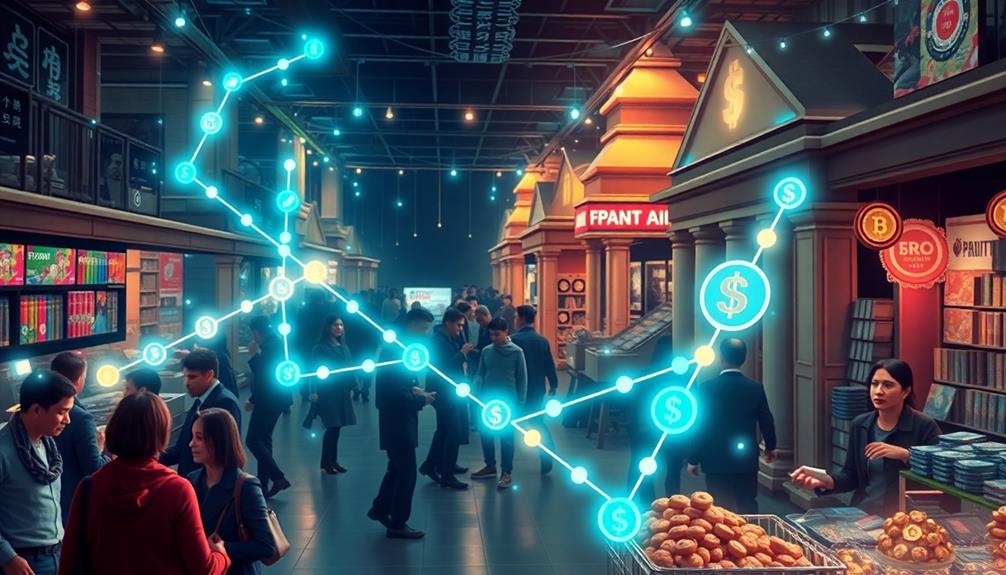
With IoT payments, your smart devices can serve as digital wallets, making transactions faster and more seamless. Wearables like smartwatches or fitness bands let you pay with a tap or gesture, eliminating cash or cards. Household appliances can automatically order supplies or pay bills, streamlining your routines. These devices use secure connections, biometrics, and encryption to protect your info. Keep exploring to discover how IoT transforms everyday payments into effortless, integrated experiences.
Key Takeaways
- IoT-enabled smart devices like wearables and appliances facilitate contactless, seamless payments through gestures, taps, or voice commands.
- These devices integrate secure payment systems, reducing physical wallet reliance and streamlining everyday transactions.
- Automated payments are enabled for household appliances, allowing inventory management and automatic replenishment.
- Advanced security features such as biometric authentication and encryption protect IoT payment data.
- The future envisions interconnected environments where entire spaces function as payment points, enhancing convenience and efficiency.
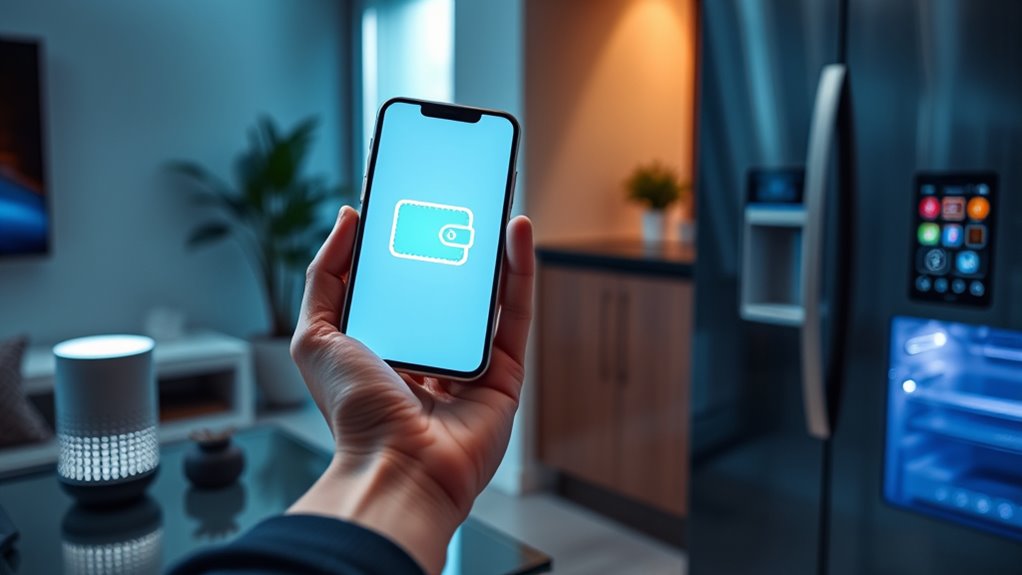
Have you ever wondered how your smart devices will change the way you pay? As the Internet of Things continues to expand, your everyday gadgets are transforming from simple tools into powerful payment platforms. Wearable commerce is a prime example—think smartwatches, fitness bands, and connected jewelry that not only track your health but also serve as wallets. With just a tap or a gesture, you can complete transactions without reaching for a credit card or pulling out cash. This seamless integration of payment capabilities into wearables makes shopping faster, more convenient, and less cumbersome. You don’t need to carry multiple cards or remember PINs; your device becomes your purse, your wallet, and your payment terminal all in one.
Smartwear devices now serve as wallets, making payments quick, easy, and contactless with just a tap or gesture.
Smart appliance transactions are also becoming increasingly common. Imagine your refrigerator, coffee maker, or even your laundry machine as part of your payment ecosystem. These smart appliances can automatically order supplies when they run low or pay for services without your direct involvement. For example, your smart fridge might detect that you’re running out of milk and order more, paying for the delivery through your connected payment system. This automation not only saves you time but also reduces the hassle of manual transactions. You might not even realize that your appliances are handling payments behind the scenes, but they’re doing so securely and efficiently thanks to IoT-enabled payment systems.
The beauty of IoT payments lies in their ability to make transactions more intuitive and frictionless. As your devices become smarter, they’ll handle more of your financial interactions automatically. For you, this means fewer trips to the bank or store, and more focus on what matters most. Plus, with advanced security features like biometric authentication and encrypted channels, your smart device transactions are safer than ever. You won’t have to worry about unauthorized access or fraud because these systems are designed to protect your financial information at every step.
In essence, your smart devices are evolving into all-encompassing financial tools. Wearable commerce and smart appliance transactions are just the beginning. Soon, your entire environment will serve as a network of secure, interconnected payment points, making the way you pay quicker, smarter, and more integrated into your daily life. This shift towards IoT-based payments isn’t just about convenience; it’s about creating a seamless financial experience that fits effortlessly into your routine. With each new device, you’re stepping closer to a future where paying is as simple as a gesture, a tap, or a voice command.
Additionally, integrating home decor elements such as aesthetic wall organization systems or stylish serveware can enhance the visual appeal of your payment environment, making the experience more personalized and pleasant.
Top picks for "internet thing payment"
Open Amazon search results for this keyword.
As an affiliate, we earn on qualifying purchases.
Frequently Asked Questions
How Secure Are Iot Payments Against Cyber Threats?
IoT payments are increasingly secure, but you should stay cautious. They use advanced encryption standards to protect your data and transactions, making it harder for cyber criminals to intercept or manipulate your information. Additionally, fraud detection systems monitor for suspicious activity, adding extra layers of security. However, no system is completely immune, so always keep your devices updated and be vigilant about potential threats to guarantee your IoT payments stay safe.
What Devices Can Function as Iot Payment Wallets?
You can use wearable devices like smartwatches and fitness trackers, as well as smart home gadgets such as connected speakers and security systems, as IoT payment wallets. These devices often feature NFC or Bluetooth technology, allowing you to make secure transactions quickly. Confirm your device’s security settings are active, and keep software up to date to protect your payment information during transactions.
How Does Iot Payment Integration Affect User Privacy?
They say, “Forewarned is forearmed,” and that’s true with IoT payment integration. It impacts your privacy by collecting data, which could be misused if not properly protected. You need to give clear user consent, understanding what data is shared. When done right, it balances convenience with data privacy, but if overlooked, it risks exposing your personal information. Stay informed and control your privacy settings to keep your data safe.
Are Iot Payments Compliant With Global Financial Regulations?
Yes, IoT payments comply with global financial regulations. You need to guarantee your systems adhere to regulatory compliance and cross-border regulations, which vary by country. By implementing robust security measures and working with regulators, you can stay aligned with international standards. This helps prevent legal issues and ensures smooth transactions across borders. Staying informed about changing regulations is essential to maintain compliance and protect user data in IoT payment systems.
What Are the Costs Associated With Implementing Iot Payment Systems?
Implementing IoT payment systems might feel like launching a spaceship, but the costs are manageable. You’ll need a thorough cost analysis to understand expenses, including advanced infrastructure requirements like secure networks and sensors. While initial investments can seem steep, they pave the way for seamless, futuristic transactions. By carefully planning and budgeting, you’ll transform everyday devices into effortless wallets, making your payment ecosystem both innovative and cost-effective in the long run.
Conclusion
As you embrace IoT payments, you realize how seamlessly your smart devices become your wallets, making transactions effortless. It’s no coincidence that devices you trust daily now handle your money, blurring the line between convenience and innovation. With each tap or voice command, you witness the future unfold—where technology and everyday life become truly interconnected. This isn’t just a trend; it’s a natural evolution, turning your devices into trusted financial partners when you least expect it.