
📊 Full opportunity report: The Free-Download Question: When Running Your Own Model Actually Beats Paying on ThorstenMeyerAI.com — validation score, market gap, and execution plan.

Get business pricing on office and shipping supplies
- Business-only prices and quantity discounts
- Tax-exempt purchasing
- Multiple users, one account, clear invoices
TL;DR
As open-weight AI models improve and hardware costs decline, running your own models can be cheaper than paying per token for API access at scale. The crossover point depends on usage volume and infrastructure investments.
Recent developments in open-weight AI models and hardware have made running your own models potentially more cost-effective than paying for API access, challenging the traditional belief that cloud services are always cheaper for high-volume use.
Thorsten Meyer highlights that the common perception of ‘free’ models is misleading; while weights are downloadable at no cost, operational expenses like hardware, electricity, and engineering are significant. The total cost of ownership (TCO) for local models includes capital expenditure, ongoing power and maintenance costs, and the engineering effort to ensure reliable inference.
Recent improvements in open-weight models have narrowed the performance gap with proprietary models. For example, models like DeepSeek V4 Pro now achieve near-frontier benchmarks at a fraction of the cost—around one-seventh of GPT-5.5—making them competitive for many tasks. The performance differential is diminishing, with some open models matching capabilities on certain benchmarks.
Hardware advancements, such as Apple’s Silicon unified memory architecture, enable running large models locally at a lower cost. Mixture-of-experts architectures further reduce resource requirements by activating only parts of the model per inference, making high-capacity models feasible on desktop hardware. These shifts mean that for sustained, predictable workloads, owning hardware may be more economical than paying per token for API access, especially when usage volume exceeds certain thresholds.
The free-download question: when running your own actually beats paying
“Why pay for on-prem when you could run Qwen free?” The download is free — running it well is not. The honest comparison is total cost of ownership vs. per-token API. And there’s a real, moving crossover.
“Free” means the download, not the running
When someone says an open model is free, they mean the weights. They’re not counting the hardware, power, ops time, the quality gap, or depreciation. For most workloads, those are the entire cost.
- Hardware — the machine to hold & run it
- Electricity — sustained inference draws real power
- Ops time — updates, queue health, tuning, 2 a.m. breakage
- The harness — context, persistence, retries (not optional)
- Quality gap — 6–12 mo behind frontier on hardest tasks
- Depreciation — frontier hardware dates in ~3 years
Where owning beats renting
Below some usage level the API wins decisively. Above some sustained, predictable volume, owned hardware wins — and the meter never restarts. Drag the volume; toggle the task and sovereignty needs.
API vs. own-hardware — monthly cost balance
An illustrative model, not a quote. The point is the shape: a real crossover that moves with your inputs.
Two regional pools, a 5–25× price gap
The “you trade away too much capability” objection got much weaker. Open weights have closed to within 5–15 points of the closed frontier — and on some tasks drawn level.
What you own when you own the inference
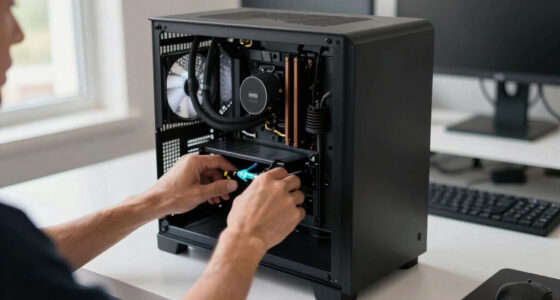
Apple Silicon’s unified memory rewired the math — a 192GB Mac Studio holds a 70B model in memory; MoE models (e.g. 35B total / ~3B active) make frontier-adjacent capability runnable on a desk. But owning inference means owning all of this:
The true-cost line items the “free” framing skips
Lived from a small Mac fleet running Qwen on MLX for a high-volume publishing pipeline: at sustained volume it pays for itself against the per-token meter — but every item below is real.
Hardware capex
The fleet up front. Depreciates — dates in ~3 years even if no invoice shows it.
Electricity
Sustained inference draws real power. At fleet scale it’s a monthly bill, not a rounding error.
Operational burden
Model updates, quantizations, queue health, throughput tuning, 2 a.m. breakage you now own.
The harness
Context, persistence, retries, tool routing. Not optional — the model is only half the system.
No per-token meter
The payoff: once owned, inference cost stops scaling with use. The meter never restarts.
Data never leaves
Nothing sent to strangers. Sovereignty is structural, not a contractual promise.
The crossover zone is real — and growing
The “just run Qwen” dismissal and the “you need a vendor” reflex are both too simple. The local path wins in a specific, identifiable zone — and that zone is bigger than a year ago.
Which way it tips
Implications for AI Deployment and Cost Management
This shift could reshape how organizations approach AI deployment, especially those with high-volume, predictable workloads. It challenges the assumption that cloud API services are always the most economical choice and opens the door for smaller operators and enterprises to consider local inference as a viable, cost-effective alternative. The decision depends heavily on usage volume, hardware investments, and the ability to optimize models within structured systems.
As an affiliate, we earn on qualifying purchases.
Evolution of Open-Weight Models and Hardware Capabilities
Historically, proprietary models from OpenAI, Anthropic, and Google have dominated the frontier, with open weights trailing behind by months. However, by mid-2026, open models like DeepSeek V4 Pro and GLM-5.1 have closed much of the performance gap, with some tasks showing parity. The cost advantage of open models is also growing, with prices now significantly lower than leading proprietary offerings.
Hardware improvements, especially in Apple Silicon and mixture-of-experts architectures, have reduced the resource barrier to local inference. These advances enable running large models on desktop hardware, previously only feasible in data centers, further tipping the cost-benefit balance toward local ownership for many users.
“The gap between ‘free to download’ and ‘cheap to operate’ is where real decisions about open versus closed AI are made.”
— Thorsten Meyer
As an affiliate, we earn on qualifying purchases.
Remaining Questions on Cost-Effectiveness and Performance
It remains unclear exactly where the precise crossover point lies for different workloads and organizations, as costs depend heavily on hardware investments, operational efficiency, and model tuning. The long-term performance parity of open models with proprietary models on the most demanding tasks is still evolving, and some capabilities lag behind the frontier by several months.
As an affiliate, we earn on qualifying purchases.
Expected Developments in Hardware and Model Capabilities
Further hardware innovations and model training techniques are likely to continue narrowing the performance gap. As open models improve and hardware costs decrease, more organizations may find local inference a more economical choice, especially if they can optimize their systems effectively. Monitoring these trends will be key to strategic AI deployment decisions.
As an affiliate, we earn on qualifying purchases.
Key Questions
When does owning a model become cheaper than paying for API access?
Typically, when your usage volume exceeds a certain threshold—often in the hundreds of thousands to millions of tokens per month—the total cost of ownership for local inference can become more economical than per-token API fees, depending on hardware costs and operational efficiency.
Are open-weight models now comparable to proprietary models in performance?
On some benchmarks and tasks, recent open-weight models like DeepSeek V4 Pro and GLM-5.1 have approached or matched proprietary models, though gaps remain on the most complex, long-horizon reasoning tasks.
What hardware improvements are enabling local inference?
Advances such as Apple’s unified memory architecture and mixture-of-experts models allow large models to run efficiently on desktop hardware, reducing the need for expensive data center infrastructure.
What are the main costs involved in running your own models?
Costs include hardware purchase or leasing, electricity, cooling, engineering time for deployment and maintenance, and ongoing operational expenses. These are often underestimated when considering ‘free’ models.
Will open models fully replace proprietary models in the near future?
While open models are rapidly closing the performance gap, proprietary models still hold advantages on the most demanding tasks. The future will likely see a mixed landscape depending on specific use cases and cost considerations.
Source: ThorstenMeyerAI.com
Fall Picks
fall essentials
As an affiliate, we earn on qualifying purchases.