
To guarantee your vending card reader retrofit works best, you’ll need a strong connectivity strategy. Cellular, wired, or Wi-Fi options each offer benefits depending on your location and volume. A reliable setup prevents transaction failures, enhances security, and supports system updates. Redundant connections keep your machines operational even during outages. Planning the right mix of connectivity keeps your system running smoothly, securely, and ready for growth—so stay with us to discover more about optimizing your setup.

Get business pricing on office and shipping supplies
- Business-only prices and quantity discounts
- Tax-exempt purchasing
- Multiple users, one account, clear invoices
Key Takeaways
- Selecting the appropriate connectivity option ensures reliable, fast transaction processing for retrofitted vending card readers.
- Redundant connections like cellular and wired Ethernet enhance system uptime and prevent transaction failures.
- Compatibility with the latest security protocols depends on a robust connectivity strategy.
- Flexible connectivity options support system updates and future scalability of the vending network.
- Proper connectivity planning maintains seamless operations despite network disruptions or location challenges.
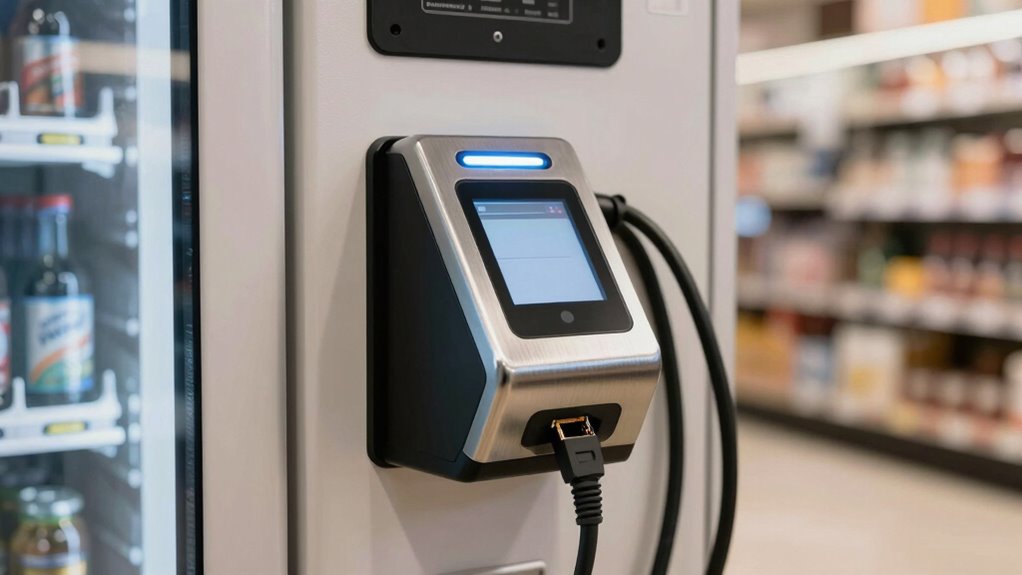
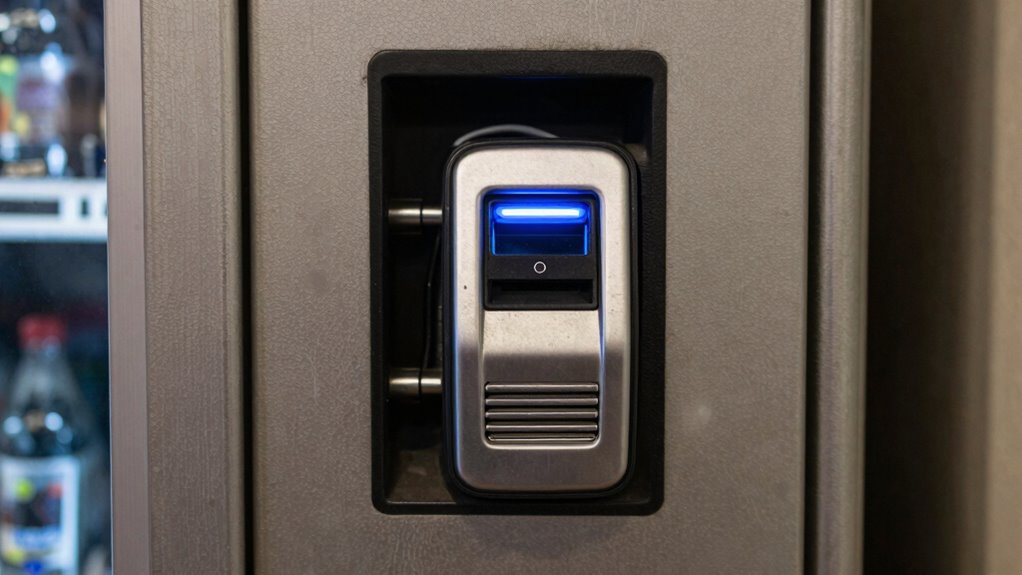
Upgrading vending machines with card readers is a smart move to enhance convenience and increase sales. When you incorporate cashless payments into your vending operations, you open the door to a broader customer base and quicker transactions. But to make the most of these system upgrades, you need to think carefully about your connectivity strategy. The right approach ensures your vending machines stay operational, secure, and capable of handling a variety of payment methods seamlessly.
A reliable connectivity plan is vital because it directly impacts transaction speed and system reliability. If your vending machines rely on unstable internet connections, you risk transaction failures, frustrated customers, and lost sales. To avoid these issues, you should evaluate your connectivity options—whether it’s wired Ethernet, cellular data, or Wi-Fi—and choose the one that best suits your location and usage volume. Cellular connectivity often offers the best flexibility, especially if your machines are in remote or hard-to-wire areas. Ensure your system supports multiple connection types if needed, providing backup options in case one fails. Incorporating redundant network connections can further safeguard your system from outages and ensure continuous operation.
When you retrofit vending machines with card readers, you’re effectively upgrading your entire payment ecosystem. This means your system should be compatible with the latest payment technologies and security protocols. A robust connectivity strategy allows for real-time communication between your vending machines and payment processing servers, enabling instant validation of cashless payments. This immediacy reduces wait times and improves customer satisfaction. Moreover, a good connection supports system updates and firmware upgrades, which are essential to keep your vending machines secure and functioning at their best. Implementing secure network connections is crucial to protect sensitive transaction data from potential cyber threats. Additionally, a well-planned connectivity approach can facilitate future scalability, allowing your vending operations to grow without major system overhauls.
vending machine card reader connectivity kit
As an affiliate, we earn on qualifying purchases.
As an affiliate, we earn on qualifying purchases.
Frequently Asked Questions
What Are the Main Benefits of Upgrading Vending Card Readers?
Upgrading vending card readers boosts payment security and user convenience. You’ll enjoy faster transactions, reducing wait times and improving customer satisfaction. Modern readers incorporate encryption, safeguarding sensitive data from threats. Plus, they make payments simpler, accepting various methods like contactless and mobile payments. Overall, these upgrades make your vending machines more reliable and secure, attracting more customers while protecting their information and enhancing their experience.
How Long Does a Typical Retrofit Process Take?
A typical retrofit process takes about one to two days, depending on your vending machine’s user interface and power requirements. You’ll need to disconnect the old card reader, install the new one, and guarantee it’s properly connected to your system. During this time, technicians also verify the power compatibility and update any software. With a clear connectivity strategy, you minimize downtime and ensure smooth operation post-retrofit.
Are Retrofits Compatible With Existing Vending Machine Models?
Yes, retrofits are compatible with many existing vending machine models, thanks to legacy compatibility. Manufacturers design retrofit kits to fit a wide range of models, accommodating diverse legacy systems. However, it’s crucial to verify model diversity and compatibility specifics before installation. This ensures your vending machines can seamlessly integrate new card readers, extending their lifespan without needing costly replacements, and maintaining smooth, efficient operations.
What Are the Cost Considerations for Retrofitting?
You need to weigh the costs carefully before retrofitting your vending machines. Conduct a thorough cost analysis to understand expenses like equipment, installation, and ongoing maintenance. Budget planning is essential to avoid surprises and guarantee a good return on investment. Remember, a penny saved is a penny earned, so consider all factors to determine whether the retrofit fits your financial goals and maximizes your vending machine’s efficiency.
How Does Connectivity Impact Vending Machine Security?
Connectivity greatly impacts vending machine security by exposing wireless vulnerabilities if not properly managed. You need to guarantee your system uses strong data encryption to protect sensitive information during transmission. Without robust encryption, hackers could exploit wireless vulnerabilities to access payment data or control systems. A secure connectivity strategy minimizes these risks, safeguarding your machines from potential breaches and ensuring customer trust remains intact.
cellular vending machine internet adapter
As an affiliate, we earn on qualifying purchases.
As an affiliate, we earn on qualifying purchases.
Conclusion
Think of your vending machine as a ship steering the vast digital ocean. Without the right connectivity strategy, it risks drifting off course or losing its way entirely. But with a well-planned retrofit, you’re equipping your vessel with a reliable compass, guiding each transaction smoothly and securely. Embrace the right connectivity, and watch your vending operations sail confidently into a future of efficiency and growth, steering clear of storms and charting a course for success.
wired Ethernet connection for vending machines
As an affiliate, we earn on qualifying purchases.
As an affiliate, we earn on qualifying purchases.
Wi-Fi module for vending machine retrofit
As an affiliate, we earn on qualifying purchases.
As an affiliate, we earn on qualifying purchases.
Halloween Picks
halloween
As an affiliate, we earn on qualifying purchases.