TL;DR
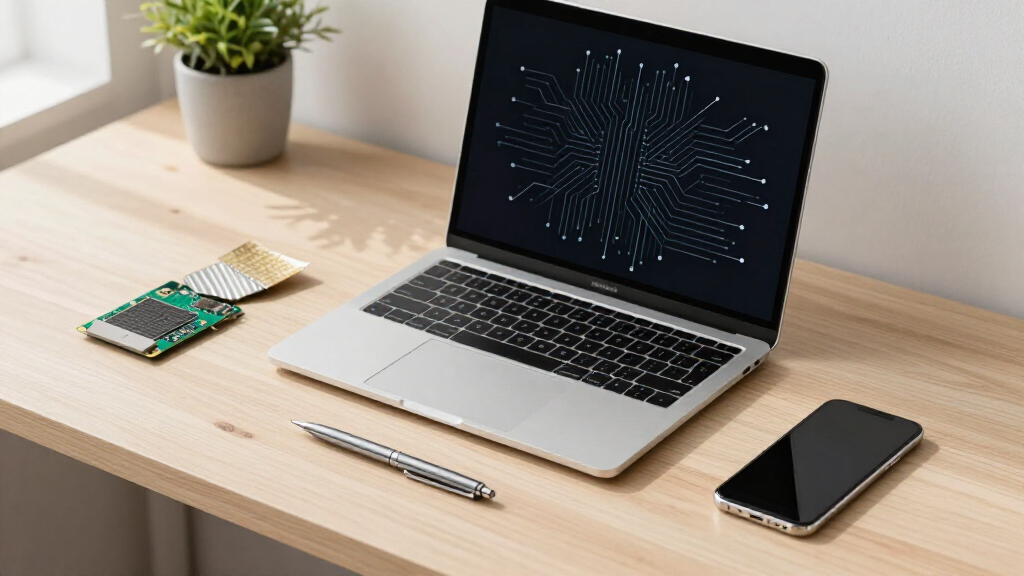
Siemens has announced the development of self-verifying, agentic AI workflows for semiconductor and PCB design. This innovation aims to automate complex tasks with built-in verification, potentially transforming electronics manufacturing. Details are confirmed, but practical implementation timelines remain uncertain.
Siemens has introduced self-verifying, agentic AI workflows designed specifically for semiconductor and printed circuit board (PCB) development. This development aims to automate complex design and verification tasks, potentially reducing errors and accelerating production cycles. The announcement highlights Siemens’ focus on integrating advanced AI capabilities into electronics manufacturing, which could significantly impact industry standards and workflows.
According to Siemens, the new AI workflows feature self-verification capabilities that enable the system to independently check the accuracy of design outputs during the process. This reduces the need for manual review and minimizes errors that can lead to costly rework. The workflows are described as agentic, meaning they can autonomously make decisions and adapt to design requirements, streamlining the development of semiconductors and PCBs. Siemens states that these innovations are built on recent advancements in AI and machine learning, aiming to enhance both the efficiency and reliability of design processes. The company did not specify a timeline for widespread deployment but indicated that initial pilot programs are underway with select partners.Potential Industry Impact of Self-Verification AI
This development is significant because it addresses longstanding challenges in semiconductor and PCB design, including the high rate of errors and lengthy verification cycles. Automating these tasks with self-verifying AI could lead to faster production times, reduced costs, and improved product quality. If successful at scale, Siemens’ approach may set new industry standards, prompting competitors to adopt similar autonomous workflows. This shift could also influence supply chain efficiencies and innovation in electronics manufacturing, making it a noteworthy advancement for the sector.

Luatoxry 6in PCB Ruler, 15cm Resistor Capacitor Chip Ruler, Copper Printed Circuit Board Versatile Engineering Measurement Tool for Professional and Electronic Enthusiasts
Measurement Range: The measurement range of multi-functional ruler is 15cm and 6inch, which covers common component layout and…
As an affiliate, we earn on qualifying purchases.
As an affiliate, we earn on qualifying purchases.
Recent Trends in AI-Driven Electronics Design
Over the past few years, the electronics industry has increasingly integrated AI and machine learning to optimize design, simulation, and testing processes. Major players have explored AI for automating routine tasks, but fully autonomous, self-verifying workflows remain a developing frontier. Siemens’ announcement builds on this trend, aiming to push the boundaries of AI autonomy in critical manufacturing stages. Previous efforts by industry leaders have shown promise but often lacked integrated verification, making Siemens’ self-verifying approach a notable evolution. The company’s focus on agentic AI specifically targets reducing human oversight and reliance on manual checks, aligning with broader industry goals for smarter, more efficient production.
“Our new AI workflows represent a significant leap toward fully autonomous design processes, with built-in verification to ensure accuracy at every step.”
— Dr. Lisa Müller, Siemens AI Innovation Lead

Physical Design Using AI for Semiconductor Engineers: Machine Learning, VLSI Physical Design, Timing Closure, Routing Optimization, Chip Layout Automation, Python Workflows, and AI for Semiconductor
As an affiliate, we earn on qualifying purchases.
As an affiliate, we earn on qualifying purchases.
Implementation Timeline and Industry Adoption Challenges
While Siemens has announced the development and initial testing of these workflows, it is not yet clear when they will be broadly available or how quickly the industry will adopt them at scale. Details about integration with existing manufacturing systems and potential regulatory or technical hurdles remain undisclosed. Additionally, the effectiveness of the self-verification in diverse real-world scenarios is still under evaluation, meaning widespread impact is still uncertain.

Sunxeke 48PCS Double Sided PCB Board Kit for DIY Soldering and Electronic Project Circuit Boards Prototype Boards Compatible with Arduino Kits, 2.54mm Male and Female Header Connector
Double Sided PCB Board:11pcs Double-sided prototype PCB boards Kit for DIY Soldering and Electronic Project Circuit Boards Compatible…
As an affiliate, we earn on qualifying purchases.
As an affiliate, we earn on qualifying purchases.
Next Steps for Siemens and Industry Stakeholders
Siemens plans to conduct further pilot programs with select partners to refine the AI workflows and assess real-world performance. The company has indicated that broader deployment could occur within the next 12 to 24 months, pending successful validation. Industry analysts will be watching for case studies and performance data to evaluate the technology’s scalability and impact on manufacturing efficiency. Additionally, competitors and other stakeholders are likely to explore similar AI innovations, potentially accelerating the shift toward autonomous design processes.

Agents You Can Leave Running: How to Engineer Agentic Loops You Can Trust Unattended (Build Agents You Can Trust)
As an affiliate, we earn on qualifying purchases.
As an affiliate, we earn on qualifying purchases.
Key Questions
What are self-verifying AI workflows?
Self-verifying AI workflows are systems that can autonomously check and validate their own outputs during the design process, reducing the need for manual review and minimizing errors.
How could Siemens’ new AI workflows affect semiconductor manufacturing?
If successfully implemented at scale, these workflows could lead to faster development cycles, lower costs, and higher reliability in semiconductor production, potentially transforming industry standards.
When will these AI workflows be available for commercial use?
Siemens has not announced a specific release date but indicates that initial pilot programs are underway, with broader availability possibly within 12 to 24 months depending on pilot outcomes.
What are the main challenges in adopting self-verifying AI in manufacturing?
Challenges include integrating new workflows with existing systems, ensuring robustness across diverse design scenarios, and addressing regulatory or technical hurdles that may arise during scaling.
Could this technology replace human engineers entirely?
While it may automate many routine and verification tasks, human oversight will likely remain essential for complex decision-making, oversight, and handling unforeseen issues.
Source: primary