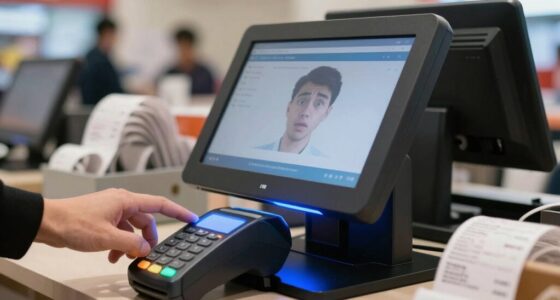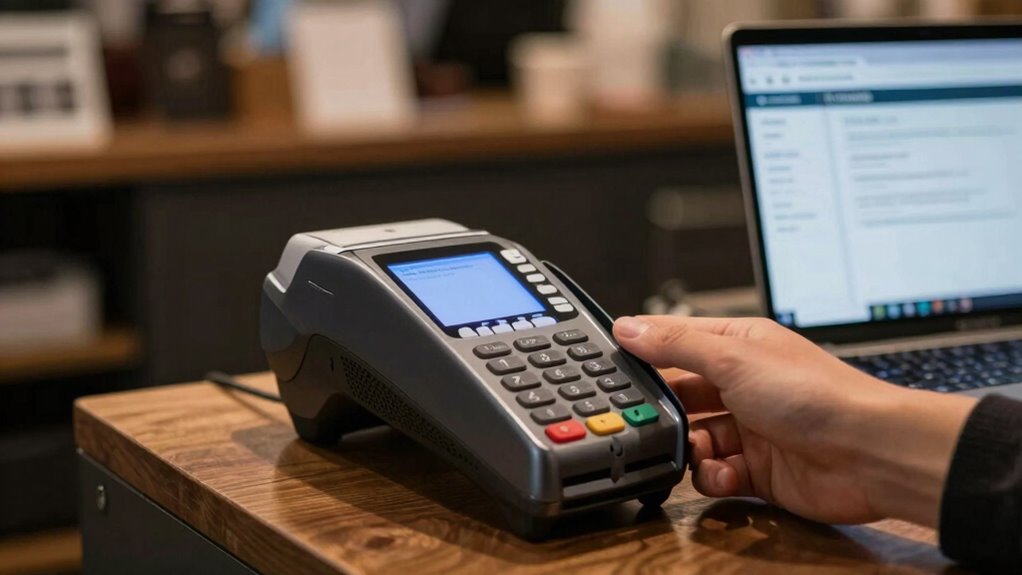

You face different fraud risks depending on whether your transactions are card present or not. Card present transactions, like in stores, are usually safer because physical verification methods such as chips, PINs, and card checks are used. Online or remote transactions lack these tangible checks, making them more vulnerable to fraud. Security measures adapt to these environments—if you keep exploring, you’ll discover how these distinctions shape security strategies and help protect your transactions from threats.

Get business pricing on office and shipping supplies
- Business-only prices and quantity discounts
- Tax-exempt purchasing
- Multiple users, one account, clear invoices
Key Takeaways
- Card present transactions typically have lower fraud risk due to physical verification methods like chip and PIN.
- Card not present transactions are more vulnerable due to the absence of tangible verification, increasing fraud likelihood.
- Online transactions rely on digital security measures such as CVV, address verification, and multi-factor authentication.
- Fraud detection for card present relies on real-time data and physical checks, while online detection focuses on anomaly analysis.
- Risk profiles influence security protocols and credit policies, with online transactions generally requiring stricter safeguards.

Ever wondered how lenders determine the risk associated with your credit card application? It all comes down to understanding different risk profiles, especially when it comes to card present and card not present transactions. These profiles are essential because they directly impact fraud detection measures and transaction security strategies. When you use your card in person at a physical store, the risk profile is generally lower. The card present environment allows for multiple layers of security, such as chip technology, PIN verification, and physical card checks. These features make it easier for merchants and issuers to confirm that the person using the card is the legitimate owner, reducing the chances of fraudulent activity. Because of this, transaction security is often more robust, and fraud detection systems can rely on more concrete authentication methods.
On the other hand, card not present transactions—like online purchases, phone orders, or mail-in applications—pose a different challenge. Since there’s no physical card involved, verifying identity becomes trickier, which naturally increases the risk profile. Lenders and merchants need to rely heavily on digital fraud detection tools, such as address verification, CVV checks, and advanced anomaly detection algorithms. These measures help identify suspicious activity, but they aren’t foolproof. The absence of physical verification means that fraudsters often exploit vulnerabilities in online payment systems, making transaction security more complex to maintain. As a result, lenders often apply stricter risk assessments for card not present transactions, sometimes requiring additional authentication steps, like two-factor authentication or biometric verification, to mitigate potential fraud. Additionally, advancements in multi-unit setups and smart yard care technology demonstrate how integrated security measures can be expanded across multiple devices or systems, a concept that can also be applied to online transaction security. Recognizing the security features used in different transaction environments helps in understanding the layered approach to fraud prevention.
Furthermore, ongoing developments in digital authentication are continually shaping how risk profiles are managed, especially in online environments.
The risk profiles influence not just how lenders assess your credit application but also how they monitor ongoing activity. For card present transactions, the focus is on real-time authentication and securing physical card data, emphasizing fraud detection through tangible methods. For card not present transactions, the emphasis shifts to online security protocols, multi-layered fraud detection, and user verification, which are essential in preventing unauthorized use. Knowledge of the different transaction environments and their security measures helps you understand the importance of layered security strategies in minimizing fraud risk. Knowing these differences helps you understand why certain transactions might trigger alerts or require extra verification. It also explains why some merchants or lenders might have stricter policies for online or phone orders compared to in-person purchases. Ultimately, both profiles aim to balance convenience with security, ensuring your transactions stay safe while minimizing risk to both you and the issuing institution.
As an affiliate, we earn on qualifying purchases.
Frequently Asked Questions
How Do Merchants Manage Fraud Differently for Card-Present Versus Card-Not-Present Transactions?
You manage fraud differently for card-present and card-not-present transactions by implementing tokenization strategies to protect sensitive data, especially in online transactions. For card-present, you focus on physical security measures like EMV chips and PIN verification. For card-not-present, you rely more on advanced fraud detection tools and educate your staff through merchant education programs, ensuring everyone recognizes suspicious activity and follows best practices to minimize risks.
What Technologies Enhance Security for Card-Not-Present Transactions?
You can enhance security for card-not-present transactions by implementing encryption protocols that protect sensitive data during transmission. Biometric verification adds an extra layer of security, allowing you to confirm customer identities through fingerprint or facial recognition. These technologies work together to reduce fraud risk, making transactions more secure and trustworthy. By adopting advanced encryption and biometric methods, you guarantee your customers’ information stays safe and your business stays protected from fraud.
How Do Chargeback Rates Compare Between Card-Present and Card-Not-Present Fraud?
Chargeback rates chase a chasm, with card-not-present transactions typically facing higher rates due to increased fraud vulnerability. You’ll find fraud detection and transaction monitoring are vital in combating these charges. Card-present transactions tend to see fewer chargebacks, thanks to tangible tokenization and tighter security. But for online purchases, vigilant vigilance minimizes missteps, making thorough monitoring and fraud detection your best allies in reducing chargeback challenges.
What Role Does Customer Authentication Play in Risk Profiles?
Customer authentication plays a vital role in shaping risk profiles by reducing fraud. You can enhance security through biometric verification, ensuring only authorized users access accounts. Additionally, tokenization security replaces sensitive data with tokens, minimizing exposure. These measures make transactions more secure, lowering fraud risks, especially in card-not-present scenarios. Implementing robust authentication methods helps you better manage risk profiles and protect your business from potential losses.
Are Certain Industries More Vulnerable to One Type of Card Risk?
Yes, certain industries are more vulnerable to specific card risks. For example, e-commerce and digital service sectors face higher card-not-present fraud due to less customer authentication. Conversely, retail stores and hospitality face more card-present risks, but industry regulation often mandates strict fraud prevention measures. Understanding these vulnerabilities helps you tailor your fraud prevention strategies, ensuring compliance and reducing losses across different business sectors.
online transaction fraud protection tools
As an affiliate, we earn on qualifying purchases.
As an affiliate, we earn on qualifying purchases.
Conclusion
Think of card-present and card-not-present risk profiles as two different landscapes—you’re traversing a bustling city street versus a quiet, shadowy alley. Understanding their unique terrain helps you steer clear of pitfalls and spot opportunities. By knowing these risks, you become the savvy traveler, confidently steering through the maze of transactions. With this knowledge, you’ll master the art of balancing safety and opportunity, turning potential hazards into stepping stones on your journey to secure, successful payments.
multi-factor authentication device
As an affiliate, we earn on qualifying purchases.
As an affiliate, we earn on qualifying purchases.
As an affiliate, we earn on qualifying purchases.
Fall Picks
fall essentials
As an affiliate, we earn on qualifying purchases.