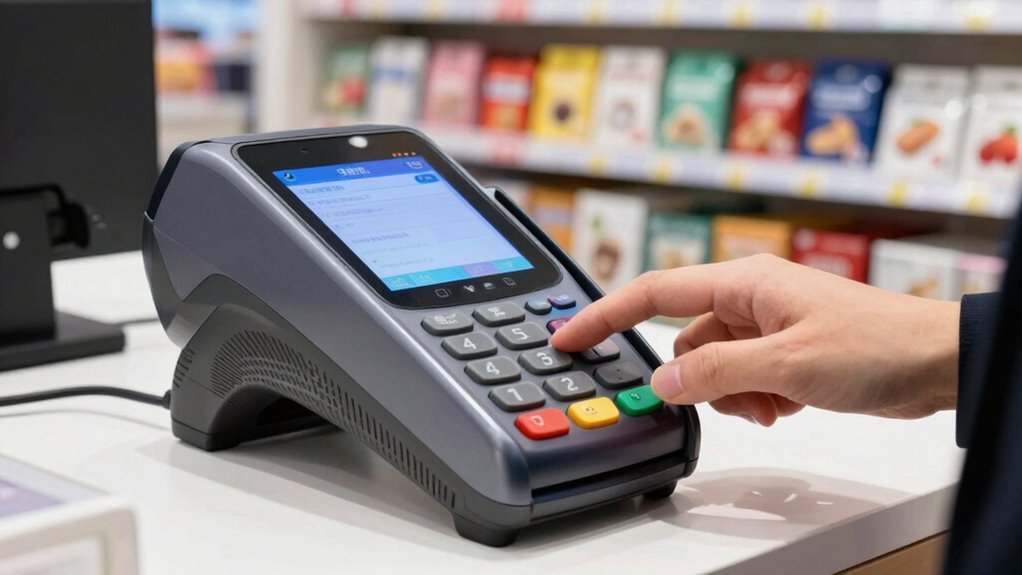

As a merchant, you need to understand that stored credential mandates set by payment networks and regulators outline how you securely store and reuse payment data. Non-compliance can lead to hefty penalties, increased liability, or even losing access to payment networks. These mandates ensure your customers’ sensitive info stays protected and your business remains compliant. Staying updated on these requirements helps you avoid risks and maintain trust. Keep exploring to learn how to effectively meet these standards.

Get business pricing on office and shipping supplies
- Business-only prices and quantity discounts
- Tax-exempt purchasing
- Multiple users, one account, clear invoices
Key Takeaways
- Merchants must follow industry-specific mandates for securely storing and reusing customer payment credentials.
- Compliance with stored credential mandates ensures adherence to payment network rules and avoids penalties.
- Proper handling includes secure storage, transmission, and usage protocols for stored payment data.
- Regular audits and security measures are essential to meet evolving regulatory and industry standards.
- Non-compliance increases risks of data breaches, penalties, and loss of merchant privileges.

Have you ever wondered how merchants securely handle stored payment credentials? It’s a vital question, especially with the increasing emphasis on customer data security. When customers trust you to process their payments, they expect their sensitive information to be protected at all costs. This is where payment tokenization plays a key role. Instead of storing actual card details, merchants convert payment information into a unique, non-sensitive token that can be used for future transactions. This process greatly reduces the risk of data breaches because even if a hacker intercepts the token, it’s meaningless outside of the specific transaction context.
Understanding stored credential mandates is essential for maintaining compliance and safeguarding customer trust. These mandates are regulations set by payment networks and regulatory bodies that dictate how merchants can store and reuse payment credentials. They specify the circumstances under which you can store credentials, how you must handle them securely, and what protocols you need to follow for subsequent transactions. Failing to adhere to these requirements can result in hefty penalties, increased liability, or loss of merchant privileges within payment networks. Implementing industry-standard security measures** is crucial to meet these requirements and protect sensitive customer data. Additionally, staying informed about evolving regulations and standards can help ensure ongoing compliance. Maintaining an understanding of security frameworks is also vital for building a comprehensive security posture. Furthermore, regular audits and assessments of your security practices can help identify potential vulnerabilities related to stored credentials**.
As an affiliate, we earn on qualifying purchases.
Frequently Asked Questions
How Do Stored Credential Mandates Affect Transaction Fees?
Stored credential mandates can increase transaction fees because they often involve enhanced security measures like payment tokenization, which may come with additional costs. If you use stored credentials for recurring billing, you’ll likely face higher fees due to the need for secure storage and compliance. However, these mandates can also streamline future transactions, reducing friction and potentially lowering costs over time. Always check with your payment processor for specific fee details.
What Are the Security Risks of Storing Customer Credentials?
Storing customer credentials can expose you to security risks like data breaches. If you don’t use proper credential encryption, hackers can access sensitive information easily. Implementing data anonymization helps protect customer identities, even if credentials are compromised. Always guarantee your storage practices follow security standards, including encryption and anonymization, to reduce risks. Regularly update your security protocols and train staff to prevent vulnerabilities and safeguard customer data effectively.
How Can Merchants Ensure Compliance With Mandates?
To guarantee compliance with stored credential mandates, you should implement strict credential storage policies that follow industry standards like PCI DSS. Use encryption and tokenization to protect customer data, and regularly audit your systems. Develop clear compliance strategies, train staff on security best practices, and stay updated on regulatory changes. These steps help you reduce risks, maintain trust, and meet all necessary requirements for secure credential storage.
Are There Specific Industries More Impacted by These Mandates?
Certain industries, like healthcare, travel, and retail, are more impacted by stored credential mandates due to industry-specific regulations and higher compliance challenges. You need to stay vigilant, ensuring your payment processes adhere to these mandates to avoid penalties and security risks. By understanding industry-specific regulations, you can develop tailored compliance strategies, reduce vulnerabilities, and maintain trust with your customers while adhering to evolving mandates effectively.
What Customer Data Is Protected Under Stored Credential Regulations?
You might think stored credential regulations only protect transaction data, but they also safeguard customer privacy by ensuring sensitive information remains confidential. Under these mandates, personal data like cardholder details, billing addresses, and payment information must be securely stored using data encryption. This approach reduces fraud risk and builds trust, reassuring your customers that their data is protected and their privacy is prioritized during every transaction.
As an affiliate, we earn on qualifying purchases.
Conclusion
Ignoring stored credential mandates isn’t just a mistake—it’s practically a financial apocalypse waiting to happen. By neglecting these requirements, you risk catastrophic breaches, crippling fines, and a reputation so tarnished it’ll take decades to recover. Embrace these mandates as your shield against chaos, ensuring your business remains resilient, trusted, and untouchable in a world teetering on the edge of compliance chaos. Don’t just follow the rules—transform them into your ultimate competitive advantage.
secure payment credential storage
As an affiliate, we earn on qualifying purchases.
As an affiliate, we earn on qualifying purchases.
payment data encryption software
As an affiliate, we earn on qualifying purchases.
As an affiliate, we earn on qualifying purchases.
Fall Picks
fall essentials
As an affiliate, we earn on qualifying purchases.