
TL;DR
Thorsten Meyer AI has introduced VigilSAR Benchmark, an early-stage public leaderboard for defense-relevant LLM evaluation. The benchmark’s main finding is that model rankings change by buyer profile, so no single model is treated as best for every deployment.
Thorsten Meyer AI has announced VigilSAR Benchmark, a public, early-stage leaderboard designed to rank AI models by deployability as well as capability, with the central finding that there is no single best model for every buyer.
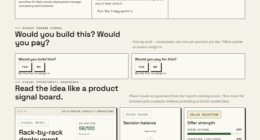
The benchmark scores models on five axes: Capability, Reliability, Robustness, Safety & Compliance, and Efficiency & Deployability. It then re-ranks the same models based on who is asking, including cloud-first users, sovereign edge users, and compliance-first buyers.
According to the source material, VigilSAR Benchmark focuses on defense-relevant competence, including domain knowledge, reliability, compliance, and the ability to run in restricted environments. The project explicitly excludes weaponeering, targeting, CBRN, and exploit-generation tasks.
The benchmark is described as public and in development, not as a finished certification system. Thorsten Meyer AI says its methodology, scope, and results will evolve, and that benchmark outcomes require independent verification.
VigilSAR Benchmark — there is no best model
Capability leaderboards measure who’s smartest. This one scores who’s deployable — across five axes — then re-ranks by who’s actually asking.
Independent commentary, produced with AI assistance under human editorial oversight. The views are the author’s own and may change. VigilSAR Benchmark is an early-stage, in-development public benchmark; methodology, scope and results will evolve and are not a certification, authority, or guarantee of any model’s fitness, safety, or compliance. It scores defense-relevant competence and explicitly excludes weaponeering, targeting, CBRN, and exploit-generation tasks. Benchmark results are indicative, can be gamed or in error, and require independent verification; nothing here endorses any model. Model and company names are trademarks of their respective owners; mention does not imply endorsement.
Deployability Replaces Raw Rank
The announcement challenges the common reading of AI leaderboards, where the highest raw capability score is often treated as the best overall model. VigilSAR Benchmark argues that a model may lead on capability while still being unsuitable for a buyer that needs on-premises operation, air-gapped deployment, EU AI Act alignment, GDPR fit, or repeatable performance under unusual inputs.
That distinction matters for sovereign, regulated, and defense-adjacent users because procurement choices can turn on deployment limits rather than benchmark intelligence. In the source’s illustrative ranking, a cloud frontier model leads for a cloud-tolerant buyer but is disqualified for a sovereign edge profile because it cannot run air-gapped on the buyer’s own hardware.
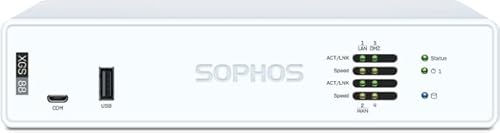
Sophos XGS 88 (Gen2) Network Security Appliance (XG88ZZ00ZZPCUS) | 4 x 2.5 GE Ports | Advanced Threat Protection, SD-WAN, Secure VPN, Centralized Management (Hardware Only)
- Product Type: Next-generation firewall appliance
- Ports: 4 x 2.5 GE copper ports
- Performance: Up to 9.9 Gbps firewall speed
As an affiliate, we earn on qualifying purchases.
As an affiliate, we earn on qualifying purchases.
A Profile-Aware Leaderboard
VigilSAR Benchmark is part of Thorsten Meyer AI’s Built in Public series and is presented as completing the Defense / Intel family in the operator portfolio. The project is framed as a provider-agnostic way to compare models by deployment setting rather than by a single global rank.
The source material contrasts VigilSAR Benchmark with capability-only tests, which it says measure how smart a model is across task batteries but do not answer whether the model is usable in sensitive settings. The benchmark’s design treats capability as one axis among five rather than the whole score.

AI Beyond Cloud: Real-Time AI at Edge | Secure AI at the edge | Distributed AI technologies | AI for smart machines | Edge computing and IoT | Edge Devices in Industry | Edge AI for IoT
As an affiliate, we earn on qualifying purchases.
As an affiliate, we earn on qualifying purchases.
Methodology Still May Change
Several details remain unsettled. The source material says VigilSAR Benchmark is early-stage and actively in development, so its methodology, scope, and model results may change. It also says the benchmark is not a certification, authority, or guarantee of any model’s fitness, safety, or compliance.
The source does not provide final model names, live scores, weighting formulas, or independent validation results in the provided material. The sample rankings use illustrative Model A, Model B, and Model C profiles to show how buyer needs can change the top-ranked model.

Signal fire New Model AI-9 Fusion Splicing Six Motor Core Alignment Fiber Fusion Splicer Automatic FTTH Fiber Optical Welding Splicing 5S Heating 15S
- Fast Splicing and Heating: Splice in 5 seconds, heat in 15 seconds
- Automatic Heating Slot: Supports SC fiber, auto lid closing
- Built-In Power Meter & VFL: Measures loss, verifies continuity, multiple wavelengths
As an affiliate, we earn on qualifying purchases.
As an affiliate, we earn on qualifying purchases.
Public Scores Need Verification
The next step is the continued development of the public leaderboard at vigilsar.com/benchmark, including clearer methodology, actual model coverage, and evidence that the scoring approach works across real deployment profiles. Buyers and analysts will need to treat results as indicative until they are independently checked against their own legal, technical, and operational requirements.

Super Flower SF-2800F14HP, Leadex Titanium 2800W ATX 3.1, Cybenetics Titanium, 10 Years Warranty, Native 12V-2×6, ECO Fanless & Silent Mode, Full Modular, Dual Ball Bearing Fan, 200-240Vac only
- Power Input: 200-240Vac only
- Voltage Compatibility: Designed for 200-240V input
- Certification: Cybenetics Titanium Certified
As an affiliate, we earn on qualifying purchases.
As an affiliate, we earn on qualifying purchases.
Key Questions
What is VigilSAR Benchmark?
VigilSAR Benchmark is a public, in-development leaderboard from Thorsten Meyer AI that scores AI models across capability, reliability, robustness, safety and compliance, and efficiency and deployability.
Why does the benchmark say there is no best model?
It re-ranks models by buyer profile. A model that leads for a cloud-first user may lose for a sovereign or air-gapped buyer if it cannot meet deployment or compliance needs.
Does VigilSAR Benchmark test weapons-related capabilities?
According to the source material, no. It scores defense-relevant competence but explicitly excludes weaponeering, targeting, CBRN, and exploit-generation tasks.
Is this a certification of model safety or compliance?
No. The source describes the benchmark as early-stage and says results are not a certification, authority, or guarantee of model fitness, safety, or compliance.
Source: Thorsten Meyer AI