
📊 Full opportunity report: Acoustic Dampening, Placement, and the “Rig in the Closet” Setup on ThorstenMeyerAI.com — validation score, market gap, and execution plan.

Get business pricing on office and shipping supplies
- Business-only prices and quantity discounts
- Tax-exempt purchasing
- Multiple users, one account, clear invoices
TL;DR
This article explores techniques to minimize noise from AI workstations, emphasizing placement strategies like moving rigs to other rooms and using ventilated closets. It highlights the importance of separating heat and sound management for quieter, more efficient setups.
Moving AI workstations into separate rooms or closets significantly reduces noise levels at the user’s workspace, according to experts. This approach, combined with proper ventilation, offers an effective alternative to traditional acoustic treatments, making quieter work environments feasible even with high-power hardware.
Experts emphasize that the most effective way to reduce noise from high-power AI rigs is to increase distance and isolation, such as placing the machine in another room or a dedicated closet. This strategy leverages the fact that noise diminishes with distance, making it more effective than acoustic foam or absorption materials alone.
The ‘rig in the closet’ setup is gaining popularity as a practical solution for noise reduction. However, it requires careful ventilation because sealed spaces trap heat, which can damage hardware over time. Active ventilation with exhaust fans or purpose-built soundproof cabinets are recommended to maintain optimal temperatures while containing noise.
Placement strategies also include using wired or strong wireless connections to control the rig remotely, since direct access is less necessary when the machine is in another room. This setup is especially suited for network-based workflows where the user interacts via SSH or APIs, not directly at the hardware.
Acoustic dampening
& the rig in the closet.
The most powerful noise fix isn’t a material — it’s a floor plan. A rig you can’t hear because it’s in another room beats any amount of foam. Tap the approaches in Part 1 to see what actually works.
(another room)
(levers 1–4)
(door / barrier)
(acoustic foam)
Contain the noise, not the heat
Why Proper Placement and Ventilation Are Critical
This approach offers a practical solution for reducing noise pollution in AI and high-performance computing environments, improving workspace comfort and productivity. Properly ventilated closets or rooms prevent overheating, extending hardware lifespan and maintaining performance. As AI workloads grow more demanding, these strategies become essential for sustainable, quiet operation.soundproof server closet enclosure
As an affiliate, we earn on qualifying purchases.
As an affiliate, we earn on qualifying purchases.
Understanding the Noise and Heat Challenges of AI Rigs
High-power AI workstations generate significant heat and noise, primarily from GPUs and cooling systems. Traditional methods focus on acoustic treatment within the same room, such as foam panels and sound barriers, which are often less effective than physical separation.
Recent insights highlight that the most effective noise reduction involves moving the hardware away from the user and managing heat dissipation properly. The concept of placing rigs in closets or separate rooms aligns with the hierarchy of noise mitigation, prioritizing distance and ventilation over absorption.
"The most effective noise reduction strategy is to put distance between you and the rig. A machine in another room or in a sealed closet with proper ventilation can be significantly quieter than any foam treatment."
— Thorsten Meyer, AI workstation expert
quiet ventilation fan for computer cabinet
As an affiliate, we earn on qualifying purchases.
As an affiliate, we earn on qualifying purchases.
Remaining Questions About Long-Term Use and Safety
While the benefits of relocating rigs to separate spaces are clear, questions remain about optimal ventilation solutions, long-term hardware durability in sealed environments, and cost-effectiveness of custom soundproof cabinets. The precise balance between noise reduction and heat dissipation continues to evolve as new hardware and cooling technologies emerge.
remote-controlled AI workstation setup
As an affiliate, we earn on qualifying purchases.
As an affiliate, we earn on qualifying purchases.
Future Developments in Quiet AI Workstation Design
Advancements in cooling technology, such as more efficient radiators and quieter exhaust fans, are expected to improve the viability of closet or room-based setups. Additionally, soundproof enclosures with active temperature control are likely to become more accessible, making silent, high-performance AI workstations more mainstream.
Further research and real-world testing will clarify best practices for long-term operation, ensuring hardware safety and optimal performance in these configurations.
acoustic dampening panels for server room
As an affiliate, we earn on qualifying purchases.
As an affiliate, we earn on qualifying purchases.
Key Questions
Is placing a high-power GPU in a closet safe?
Yes, but only if proper ventilation is provided. Sealed environments without airflow can lead to overheating and hardware damage.
What are the best ways to ventilate a closet containing a GPU rig?
Using active exhaust fans, passive vents, or purpose-built soundproof cabinets with integrated cooling systems are effective methods to ensure adequate airflow and temperature control.
Does moving the rig away from my workspace affect workflow?
Not necessarily. Since most AI workflows are network-based, you can interact with the rig remotely via SSH or APIs, making physical distance less problematic.
Can acoustic foam alone make a noisy rig quiet?
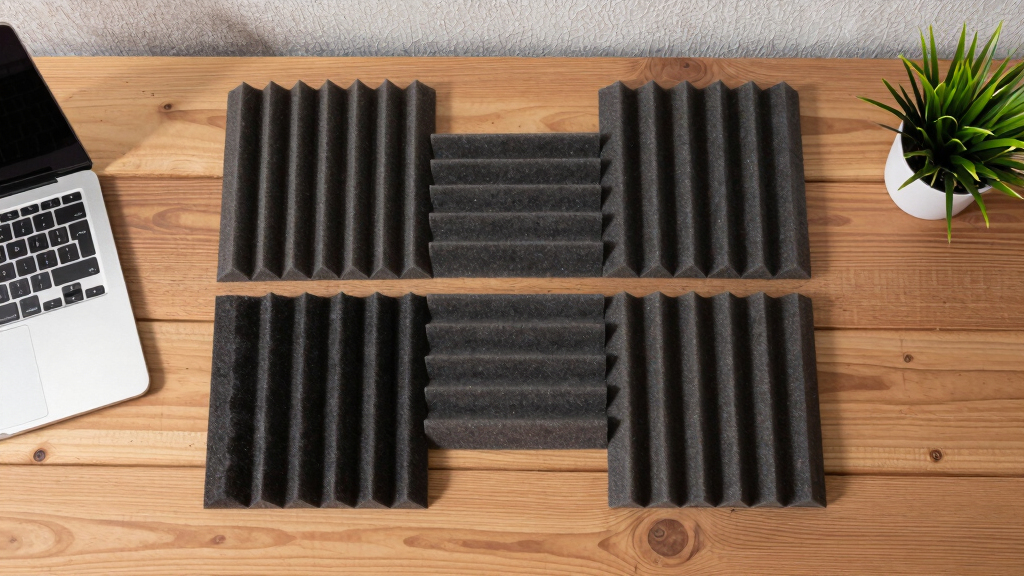
No. Acoustic foam reduces echo and reflections but does not block airborne noise or structural vibrations. Proper placement and ventilation are more effective.
Are there commercial options for soundproofing high-power AI rigs?
Yes, purpose-built soundproof cabinets with integrated cooling are available, but they tend to be costly and require careful planning for airflow and heat dissipation.
Source: ThorstenMeyerAI.com
Halloween Picks
halloween
As an affiliate, we earn on qualifying purchases.